
Sea Salt Fragrances vs. Aquatic Notes | Scent Profiles, Longevity
Sea salt fragrances and aquatic notes are two popular fresh-scent directions in contemporary perfumery.
Both families share a marine association, but they are not the same. Aquatic notes usually create a clean, watery, transparent impression, while sea salt fragrances create a more textured salty-mineral effect.
Aquatic notes are often built around watery, ozonic, or marine-smelling aroma materials. Sea salt fragrances are usually composed through mineral facets, marine effects, woods, musks, and ambergris-like materials rather than through the direct smell of salt.
| Dimension | Aquatic Notes | Sea Salt Fragrances |
| Core impression | Fresh, transparent, watery, cool | Salty, mineral, airy, textured |
| Typical structure | Watery, ozonic, and marine-smelling materials | Mineral facets, marine effects, woods, musks, and ambergris-like materials |
| Best use | Clean daily wear, office settings, warm weather | Personal signature scent, leisure settings, cooler weather |
| Wearing style | Light background scent | More distinctive and layered scent |

Scent Profiles
Key Ingredients
The ingredient systems of sea salt fragrances and aquatic notes are fundamentally different. This difference affects how each fragrance smells, develops, and lasts on skin.
- Aquatic notes usually rely on watery, ozonic, and marine-smelling aroma molecules.
- Sea salt fragrances are usually built as a salty-mineral impression rather than as the direct smell of salt.
The material most closely associated with modern aquatic notes is Calone, also known as Watermelon Ketone.
Calone's chemical name is 7-methyl-3,4-dihydro-2H-1,5-benzodioxepin-3-one, and its CAS number is 28940-11-6. PubChem records its molecular formula as C₁₀H₁₀O₃ and its molecular weight as 178.18 g/mol.[1]
In perfumery, Calone is commonly associated with watery, melon-like, marine, and ozonic effects. It helps give many aquatic fragrances their recognizable clean and airy character.
However, the performance of Calone should not be explained by one chemical parameter alone. Final diffusion, evaporation, and longevity also depend on molecular properties, dosage, solvent, concentration, skin condition, and the rest of the fragrance formula.
The ingredient system of sea salt fragrances is more complex.
Natural salt is mainly sodium chloride. The U.S. Food and Drug Administration describes table salt as sodium chloride, a crystal-like compound abundant in nature.[2]
Seawater contains dissolved salts, and sodium and chloride are the major ions associated with what people commonly recognize as salt.[3]
But salt itself is not a typical volatile fragrance material. In perfumery, the smell of "sea salt" is usually a constructed impression rather than the direct odor of sodium chloride.
- Marine or algae-inspired materials can suggest a cool coastal atmosphere.
- Ambergris-like materials can provide warmth, skin-like depth, and a slightly marine base.
- Woody materials add dryness, structure, and lasting power.
- Musks can make the fragrance feel softer and closer to skin.
- Fresh watery materials help recreate the airy sensation of ocean wind.
Ambroxide is one example of an ambergris-related material used in perfumery. PubChem describes Ambroxide as a compound responsible for the odor of ambergris, while published research notes that synthetic ambroxides have replaced ambergris in perfume manufacture.[4][5]
For this reason, truly "salt-added" fragrances are rare. Most sea salt fragrances are designed to create a salty, mineral, coastal impression through composition.
Scent Characteristics
The olfactory differences between aquatic notes and sea salt fragrances come from their different ingredient logic.
Aquatic notes usually produce a linear, smooth, and transparent fragrance trajectory. They can feel like clean air near the sea: moist, cool, and continuous.
This linear quality makes aquatic fragrances suitable as a background scent. They can make the wearer smell fresh without drawing too much attention.
Sea salt fragrances usually feel more dynamic and textured.
- The opening may feel like cool coastal wind.
- The middle stage may reveal mineral, airy, and slightly briny facets.
- The dry-down may become warmer, softer, woody, musky, or ambered.
Aquatic notes often create the feeling of open space. Sea salt fragrances often create the feeling of texture on skin.
Aquatic notes say: "I am near the sea." Sea salt fragrances say: "The sea breeze is touching my skin."
Freshness vs. Warmth
This is the key decision point when choosing between these two fragrance families.
Aquatic notes are usually better suited for spring, summer, and warm indoor environments. Their clean and watery character makes them easy to wear when the weather is hot or humid.
Sea salt fragrances often perform well in autumn and winter, especially when the formula contains ambergris-like, woody, or musky base materials.
The main reason is that many sea salt fragrances do not remain purely cool from start to finish. They may begin with mineral freshness and gradually move toward a warmer, skin-like dry-down.
- Aquatic notes emphasize freshness and transparency.
- Sea salt fragrances emphasize texture and gradual development.
- Aquatic notes feel cleaner and lighter; sea salt fragrances feel more personal and dimensional.
From a consumer-preference perspective, aquatic notes are broadly accepted by wearers who prefer clean, fresh scents. Sea salt fragrances appeal to wearers who want a more textured, gender-neutral, and personal scent identity.
Longevity
Staying Power
Longevity is one of the most noticeable differences between aquatic notes and sea salt fragrances.
Aquatic fragrances usually have a lighter wear profile on skin. Fragrances built strongly around watery and ozonic materials often feel less anchored than woody, amber, or musky fragrances.
This does not mean aquatic fragrances are always weak. Their actual staying power depends on concentration, fixatives, base notes, and the full formula.
Sea salt fragrances have a wider longevity range.
- Fresh sea salt formulas with fewer base materials may fade relatively quickly.
- Sea salt formulas with woods, musks, ambergris-like materials, or other fixatives usually last longer.
- Warmer base materials often make the dry-down more noticeable on skin.
For daily use, aquatic fragrances often benefit from light reapplication. Sea salt fragrances are usually better applied in a measured but sufficient amount, so the wearer can experience the full development from fresh opening to warmer dry-down.
Skin Interaction
How a fragrance performs on skin depends on sebum, sweat, skin moisture, body temperature, airflow, and the surrounding environment.
Research on fragrance evaporation shows that both fragrance molecular properties and skin properties can influence evaporation behavior on human skin.[6]
Aquatic notes may feel clearer and more stable on well-moisturized skin. Dry skin, with less surface moisture and weaker moisture retention, may make fresh materials feel lighter and shorter-lived.
Moisturizers are designed to increase skin water content and support the skin's protective barrier function, which is one reason many fragrance wearers find that scents perform better on hydrated skin.[7]
Sea salt fragrances are often less dependent on one single skin factor because their structure usually includes several supporting materials.
- Ambergris-like materials can add depth and warmth.
- Woody materials can improve structure and lasting power.
- Musks can make the scent feel smoother and closer to skin.
- Marine and mineral facets can maintain the coastal impression.
Still, sea salt fragrances can vary from person to person. Sweat, body temperature, and natural skin chemistry may make the salty impression feel more mineral, salty-sweet, or skin-like.
Instead of focusing only on skin pH, it is more useful to consider the full wearing environment.
- Skin moisture affects how fresh notes diffuse.
- Oil level affects how long fragrance materials remain noticeable.
- Perspiration can change salty and mineral impressions.
- Body temperature changes evaporation speed.
- Airflow affects how quickly lighter materials disperse.
In hot weather or strong air circulation, fresh aquatic materials may dissipate faster. In cooler conditions, woody, musky, and amber-like bases in sea salt fragrances may become more prominent.
Seasonal Suitability
As a general rule, aquatic notes are easier to wear in warm weather, while sea salt fragrances often become more comfortable in cooler weather.
This is not an absolute standard. A light sea salt fragrance can work in summer, and a deeper aquatic fragrance with woods or musks can work in autumn or winter.
| Season | Recommended Family | Reason |
| Spring | Both viable | Moderate temperatures give both aquatic freshness and sea salt texture room to express themselves |
| Summer | Aquatic notes preferred | Clean watery freshness usually feels lighter and more comfortable in heat |
| Autumn | Sea salt preferred | Mineral freshness and woody or ambered bases fit dry, cooler air |
| Winter | Sea salt preferred | Warm musky, woody, or ambergris-like bases can provide more presence in cold air |
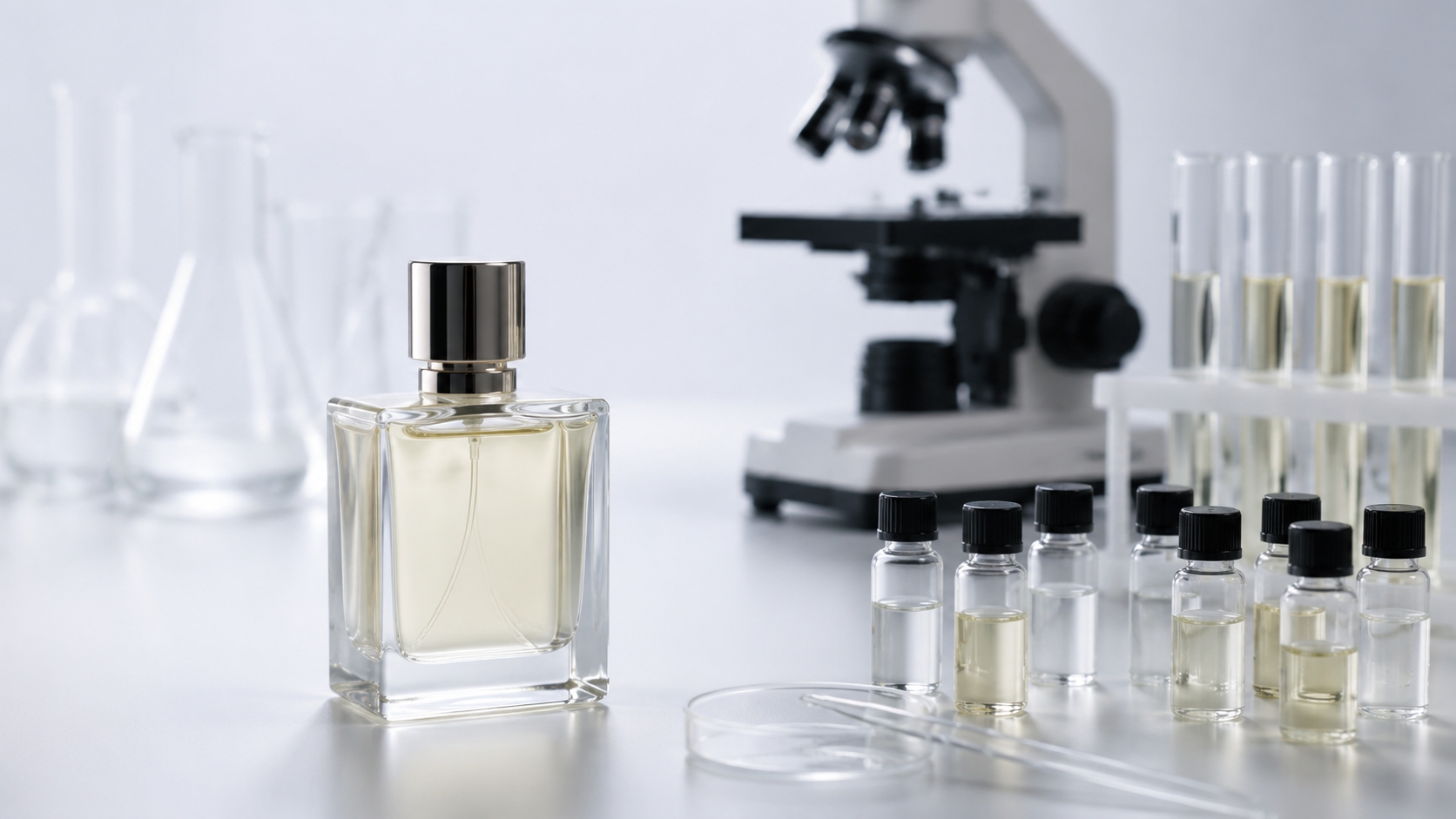
When selecting a sea salt fragrance for winter, look for formulas with woody, musky, or ambergris-like base materials.
When choosing aquatic notes for summer, avoid excessive application in spaces with strong direct air conditioning. Cold airflow can make lighter fresh materials feel more diffusive and less noticeable.