
Solid Perfume vs. Roll-On Perfume | Portability, Longevity, Formula
If carrying perfume around without worrying about leaks matters most, solid perfume is usually the easier choice. If you want something quick to apply without touching the perfume with your fingers, a roll-on is more convenient. As for which one lasts longer, there is no fixed answer. The formula, fragrance concentration, amount used, skin, and temperature all make a difference.
Solid Perfume vs Roll-On Perfume at a Glance
| Factor | Solid Perfume | Roll-On Perfume |
|---|---|---|
| Form | Balm, compact, or stick | Liquid |
| Application | Finger, stick, or applicator | Roller ball |
| Common base | Wax, oils, emollients, butters | Oil, emollients, alcohol, or mixed solvents |
| Leak risk | Very low | Depends on the roller and cap |
| Heat | May soften | Stays liquid, but may flow more easily |
| Application speed | Moderate | Fast |
| Dose control | Very precise | Depends on roller flow |
| Projection | Usually stays close to the skin | Usually close to moderate |
| Best fit | Small bags, travel, discreet use | Daily use and quick reapplication |
| Main problem | Can soften in high heat | Can leak or dispense unevenly |
These differences are useful when choosing a format, but they do not tell you exactly how a perfume will perform. A strong woody solid can easily last longer than a light citrus roll-on. A wet roller can also put far more product on the skin than one small swipe of a firm balm.
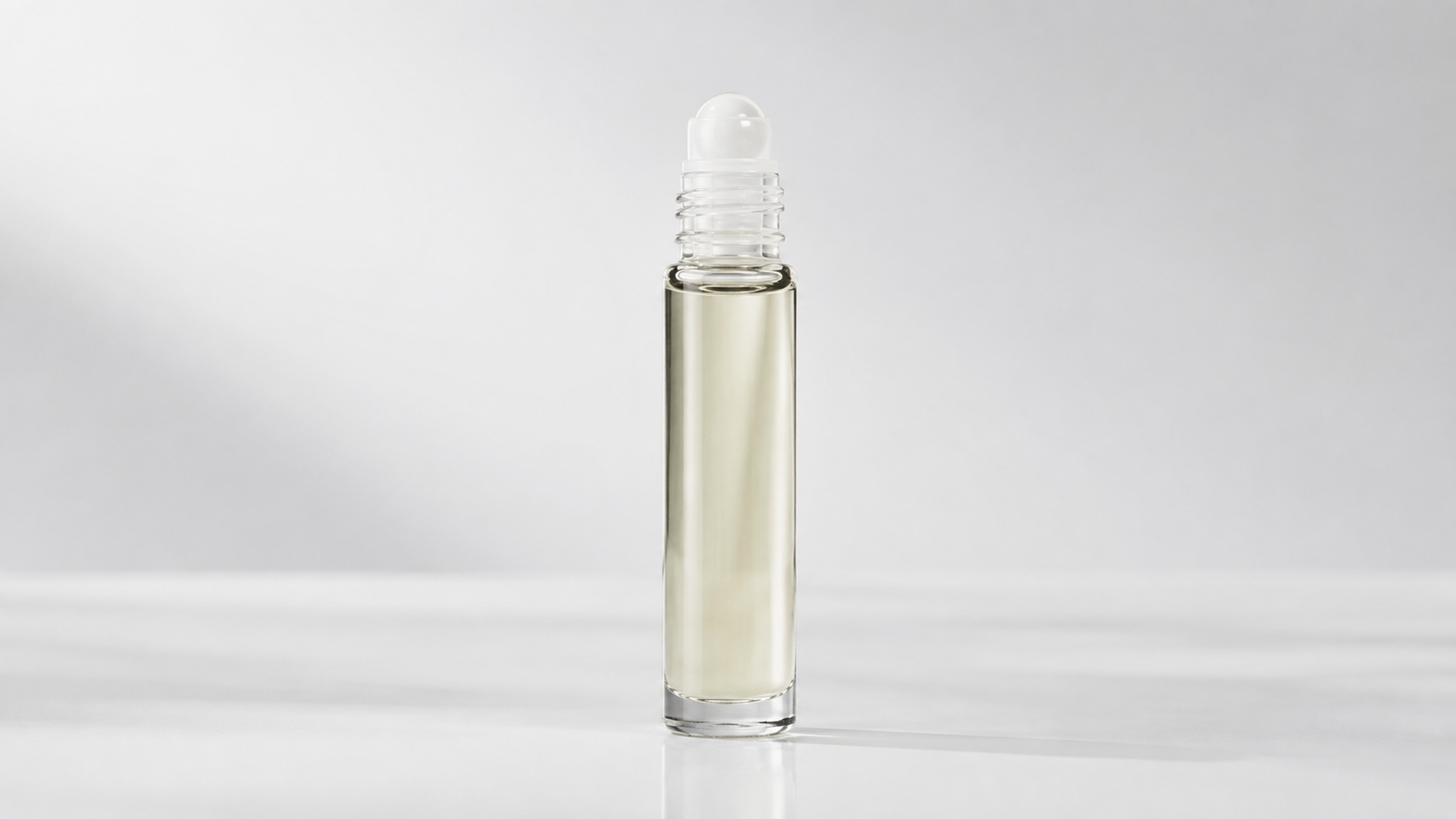
Choose Solid Perfume When These Things Matter
Solid perfume makes the most sense when it needs to live in a handbag, pocket, desk drawer, or travel pouch.
- You worry about leaks: a normal solid perfume has no free-flowing liquid inside.
- You like using small amounts: it is easy to pick up a little product and add more only when needed.
- You prefer a quiet scent: solids are usually applied to a small skin area, so the fragrance often stays fairly close to the body.
- You use perfume around other people: there is no spray mist going into the surrounding air.
- You carry perfume in different positions: turning a solid compact sideways or upside down is usually less of a concern than doing the same with a liquid bottle.
The main thing to watch is heat. A soft balm can become much softer inside a hot car, beach bag, or bag left in direct sun.
Solid perfume is one of the formats covered by XUELEI's fragrance OEM/ODM manufacturing services, where the scent, base, container, and product stability are developed as parts of the same finished product.
Choose Roll-On Perfume When These Things Matter
A roll-on is usually the easier option when speed matters more than having the lowest possible leak risk.
- You do not want perfume on your fingers: the roller puts the liquid straight onto the skin.
- You reapply during the day: a quick pass over the skin takes only a few seconds.
- You prefer a liquid texture: roll-on formulas generally spread more easily than a firm solid.
- You live in a hot climate: there is no balm base that can soften or partly melt.
- You use perfume often: opening the cap, applying the perfume, and closing it again is quick and simple.
The main weakness is the package. If the roller is loose, the cap does not seal well, or the liquid flows too freely, perfume can collect around the bottle neck or inside the cap.
What Actually Changes Longevity
Whether a perfume is solid or liquid is only part of the story. Five things usually matter more:
- Fragrance concentration: using more fragrance material can make a perfume stronger or longer lasting, but it does not guarantee either.
- Scent materials: citrus, green, woody, musky, resinous, and amber-style materials do not fade at the same speed.
- Amount used: one wet pass from a roller can put much more product on the skin than a thin layer of solid perfume.
- Skin and application area: perfume on the wrists is exposed to more washing and rubbing than perfume on some other areas.
- Temperature: warmth can change how quickly fragrance reaches the air and how much product comes out of the package.
One common mistake is judging concentration by how oily the skin feels. A heavy oil layer may simply come from the carrier. It does not prove that the perfume contains more fragrance material. A lighter roll-on can still have a strong scent.
Fresh citrus and green notes often change sooner than fragrances built around woods, musks, resins, or amber-style notes. That is only a general pattern. The full formula is what matters in the end.
Test Both Formats at 0, 2, 4, and 6 Hours
If you really want to know which product performs better, test them side by side. Use similar amounts on similar skin areas and check both at the same times.
| Time | What to Check |
|---|---|
| 0 hours | Opening strength, skin feel, and first projection |
| 2 hours | How much the opening has changed and which notes remain |
| 4 hours | Skin scent, projection, and overall scent balance |
| 6 hours | Whether the fragrance is still clearly noticeable on the skin |
These 0-, 2-, 4-, and 6-hour points are simply useful times for comparing two products. They do not mean every solid or roll-on perfume should last for six hours.
At each point, look at three things:
- Longevity: can you still smell the perfume?
- Projection: can you smell it without putting your nose right against the skin?
- Scent quality: does it still smell pleasant and balanced as it becomes weaker?
Keep the amount reasonably similar. One tiny swipe of solid perfume against several wet roller passes tells you more about how much was applied than about which format is better.
Do Not Confuse Longevity With Projection
Longevity means how long the scent remains noticeable. Projection means how far away someone can smell it. Sillage is the trail of scent left behind as a person moves.
These are not the same thing. A perfume can stay on the skin for hours while barely being noticeable beyond close range.
That is common with products applied over a small area. Solid perfumes and roll-ons often work well when the goal is a personal scent rather than something that fills a room.
This makes them useful in places such as:
- offices;
- restaurants;
- airplanes;
- classrooms;
- shared vehicles;
- other small indoor spaces.
There is another simple reason perfume can seem to disappear: after smelling the same scent for a long time, the wearer may notice it less. Before adding several more layers, move away from the scent for a while and check it again later.
Check These 4 Things in a Solid Perfume Formula
A good solid perfume needs four basic things to work properly:
- Firmness: it should stay inside the container during normal use.
- Pickup: the product should transfer without needing hard rubbing.
- Spread: it should move across the skin without feeling too dry or heavy.
- Stability: normal storage should not cause major separation or texture problems.
The final feel comes from the whole base, not from one special ingredient.
Waxes and similar ingredients give the perfume structure. Too much can make the balm hard and difficult to pick up. Too little can leave it soft or oily.
Oils, emollients, and butters change how soft the product feels, how easily it spreads, how much shine or oily residue it leaves, how it responds to heat, and how the fragrance comes off the skin.
Some formulas containing plant butters may become grainy after repeated heating and cooling. That can make the texture less pleasant, but it does not automatically mean the perfume is unsafe.
A finger-applied balm and a solid perfume stick also need different levels of firmness, so there is no single wax level that works for every solid perfume.
XUELEI's fragrance development and manufacturing work connects the formula with product design, production, packaging, and quality control because changing one part can affect the rest.
Check These 4 Things in a Roll-On Formula
With a roll-on, the main question is not whether the liquid looks oily. What matters is whether the liquid and roller work well together.
- Flow: the ball should move easily without leaving the skin soaked.
- Liquid thickness: very thick formulas may come out poorly, while very thin formulas may come out too quickly.
- Skin feel: some formulas leave a richer oil layer while others feel much lighter.
- Bottle fit: perfume should not regularly collect around the neck or leak into the cap.
“Roll-on” only tells you how the perfume is applied. It does not tell you what the liquid is made from. A roll-on can be oil-based, contain alcohol, or use another suitable liquid carrier.
A heavier, oilier feel also does not mean there is more fragrance in the bottle. The carrier and the fragrance concentration are two different things.
XUELEI's article on scent creation, safety testing, and perfume production explains why the fragrance itself has to be developed together with the finished product.
Why the Same Scent Can Smell Different in Each Format
A spray, solid perfume, and roll-on made around the same scent idea can smell noticeably different.
A spray spreads perfume as a fine mist over a larger area. A solid sits on the skin as a balm. A roll-on leaves a thin layer of liquid on a smaller area.
That can change:
- how strong the first few minutes smell;
- how quickly the fresher notes fade;
- how easy it is to notice the middle and base notes;
- how much fragrance reaches the air around the wearer;
- how the product feels on the skin.
The formula itself may also need to change when the same scent moves from an alcohol spray into an oil or solid base. The maker may need to deal with how ingredients mix, how stable the product is, its color, texture, and how the scent is released.
For that reason, it is better to smell the actual solid or roll-on version than assume it will behave exactly like a spray with the same scent name.
XUELEI's perfume manufacturing process covers the scent together with the formula, production, packaging, and stability instead of treating fragrance as a separate step.
Heat Can Change Both Texture and Dose
Heat affects the two formats in different ways.
A solid perfume can become softer inside a hot vehicle or under direct sun. Once it becomes softer, more product may also come off onto the finger, so the wearer can accidentally apply a larger amount.
A roll-on stays liquid, but some liquids become thinner in warm conditions. That can make more perfume move around the ball or collect near a weak seal.
Better places to keep perfume include:
- a drawer;
- a closed cabinet;
- a shelf away from direct sunlight;
- another indoor place without large temperature swings.
Pay more attention if the product develops:
- a clearly strange or rancid smell;
- heavy separation that does not return to normal;
- damaged or leaking packaging;
- a major change in texture;
- repeated skin reactions.
A solid that becomes a little softer in summer and firms up again indoors may simply be reacting to heat. Do not try to fix an old perfume by adding water, alcohol, oil, or other ingredients.
Check the Package Before Buying
The package can make a good perfume easy or frustrating to use.
| Solid Perfume | Roll-On Perfume |
|---|---|
| Does the lid close firmly? | Does the cap seal firmly? |
| Is the balm easy to pick up? | Does the ball move smoothly? |
| Can you still reach the product when the container is nearly empty? | Does the roller give a similar amount each time? |
| Does softened balm stay inside the container? | Does liquid collect around the bottle neck? |
A roller that is too tight may barely release any perfume. One that is too loose can put out too much and leave the bottle messy.
The finished perfume should also be tested in the actual roller bottle. Water and perfume oil do not always move through the same roller in the same way.
Use Extra Care on Sensitive or Irritated Skin
Neither format is automatically better for sensitive skin.
FDA lists fragrance among common cosmetic allergen categories and notes that reactions can include itchy, red skin and contact dermatitis.[1]
Stop using a perfume if it repeatedly causes:
- itching;
- redness;
- burning;
- dry patches;
- swelling;
- rash.
Do not put fragranced products directly on open cuts, active rashes, broken skin, or clearly inflamed areas.
A formula with little or no alcohol may feel different on dry skin, but that does not remove the chance of reacting to the fragrance itself.
Natural fragrance is not automatically safer either. FDA advises consumers not to assume natural or organic cosmetic ingredients are safer simply because of where they come from.[2]
IFRA Standards can prohibit, limit, or place conditions on certain fragrance materials when safety controls are needed.[3] These industry standards do not replace the cosmetic laws that apply in the country where a perfume is sold.
Do Not Read Too Much Into “Natural,” “Clean,” or “Hypoallergenic”
Natural: tells you something about where an ingredient comes from. It does not guarantee that everyone will tolerate it.
Clean: does not have one universal formula definition used by every perfume brand.
Alcohol-free: tells you the product does not contain alcohol when the claim is accurate. It does not mean allergy-free, and it does not prove that a roll-on is oil-based.
Long lasting: does not have one standard number of hours. One person may be talking about how long the scent stays on the skin, while another may mean how long other people can smell it.
Hypoallergenic: is not a guarantee either. FDA states that there is no U.S. federal standard or definition controlling the use of “hypoallergenic” for cosmetics.[4]
U.S. and EU Fragrance Labels Are Not the Same
In the United States, some fragrance ingredients can appear on a cosmetic label under the general term “fragrance” or “perfume” instead of being listed one by one.[5]
The European Union uses specific labeling rules for listed fragrance allergens. Commission Regulation (EU) 2023/1545 added 56 more fragrance allergens to the individual labeling framework.[6]
The listed fragrance allergens covered by these rules must appear individually on the label when they are above:
- 0.001% in leave-on products;
- 0.01% in rinse-off products.
These are labeling limits. They are not a promise that a product below those levels cannot cause a reaction in a sensitive person.
Apply It Without Wasting Product
Whichever format you use, start with a small amount. Give the scent a little time before adding more.
Common application areas include:
- wrists;
- inner elbows;
- neck;
- behind the ears.
Perfume can seem to disappear faster from the wrists because they are washed and rub against sleeves, desks, and other surfaces throughout the day.
There is no need to rub the perfume hard into the skin. Friction does not turn the fragrance on or make it work better.
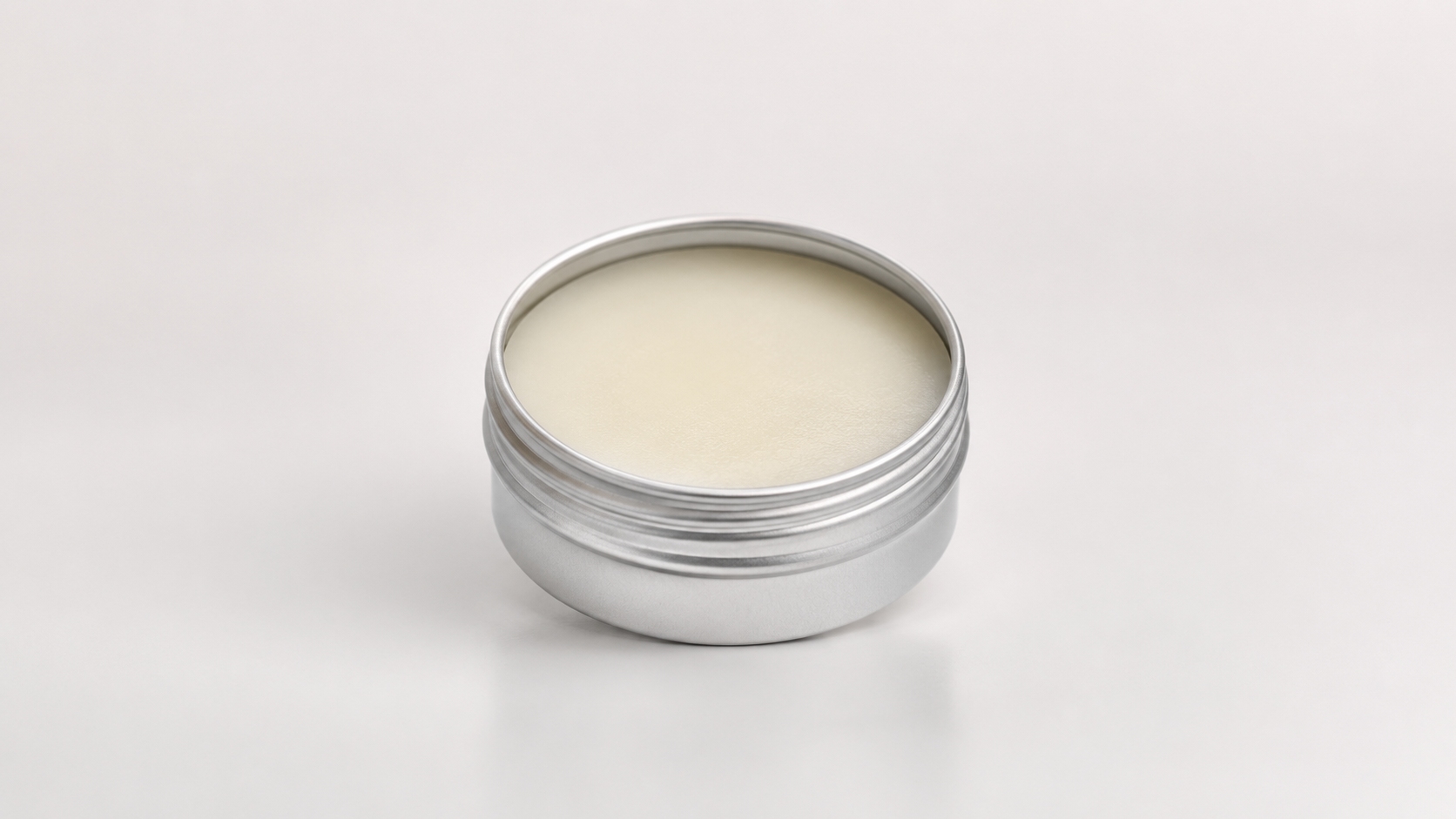
For a jar-style solid, use clean, dry fingers. For a roll-on, keep the bottle neck and cap free from obvious perfume buildup.
Avoid Oil and Wax Marks on Clothes
A clear roll-on can still leave an oil mark. A colorless solid can also leave wax or oily residue.
Take extra care with:
- silk;
- satin;
- white fabrics;
- pale linen;
- dry-clean-only clothing.
Apply the perfume to suitable skin areas and give it a moment to settle before letting clothing press against it.
Oil and wax can also build up on watch straps, bracelets, and necklaces. Applying perfume before putting jewelry over the same area can reduce this residue.
Use These 6 Checks Before Buying
- Formula: Is the roll-on oil-based, alcohol-containing, or another liquid formula? Is the solid a firm stick or a softer balm?
- Climate: Will the perfume spend a lot of time in a hot bag, vehicle, or outdoor environment?
- Application: Are you comfortable applying a solid with your fingers, or would you rather use a roller?
- Projection: Do you want the fragrance to stay close to the skin, or do you want people farther away to notice it?
- Packaging: Does the solid close securely? Does the roller move smoothly without leaking?
- Scent style: Are you comparing similar fragrance types when judging longevity?
Do not compare a light citrus solid with a heavy amber roll-on and use that result to decide which format lasts longer. In that case, the difference between the fragrances themselves is too large.