
How to Start Your Own Perfume Brand | Brand Identity & Factory Selection
Starting a perfume brand requires coordinated decisions across brand identity, product planning, regulatory readiness, manufacturing, and launch economics.
The broader cosmetics and personal care sector remains economically significant. Cosmetics Europe reported that Europe’s cosmetics and personal care retail market was valued at €110 billion in 2025, including €17.1 billion for fragrances and perfumes. Sector scale can create opportunities, but market size alone does not guarantee that a new fragrance concept will find buyers or reach profitability[1].
| Development path | Typical schedule | What may affect the timeline |
|---|---|---|
| Existing fragrance with a stock bottle | Approximately 8-12 weeks | This can be realistic when decisions are made quickly and the project uses available components. |
| Custom fragrance, custom decoration, extensive testing, or new bottle mold | Approximately 4-9 months | The schedule can extend because formula work, packaging development, testing, and approvals take more time. |
Before contacting a factory, founders should define:
- Target market
- Sales channel
- Intended retail price
- First-order budget
- Ownership expectations for the formula and packaging
- Countries where the product will be sold
This guide is published by XuLei, a fragrance OEM/ODM manufacturer, and combines general planning principles with clearly identified observations from manufacturing projects.
It explains how to build those decisions into a practical brand brief, evaluate samples and commercial terms, and select an OEM partner without treating manufacturing as an isolated purchasing decision.
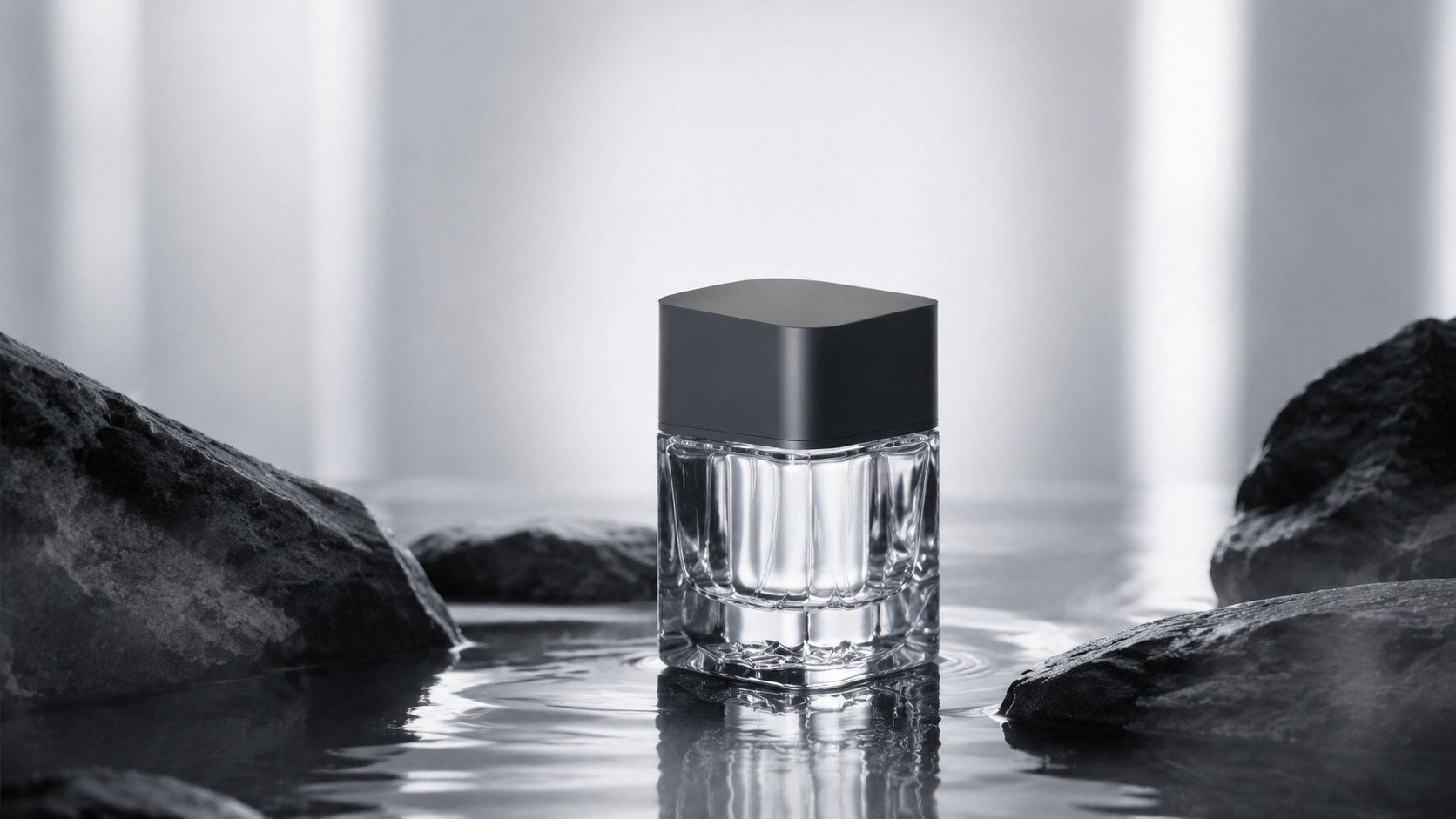
Brand Identity
Target Customers
The first step in creating a perfume brand is not naming the brand or choosing a favorite scent. It is defining whose problem the product will solve and in what situation it will be used.
Start with the customer problem, not only with a demographic label.
Fragrance consultation should begin with a customer problem rather than a demographic label.
China's fragrance market, for example, was reported to have reached nearly 25 billion RMB in 2024 and was projected to exceed 33.9 billion RMB by 2028[2].
Consumers were also described as seeking more emotional, cultural, personalized, and scenario-based fragrance experiences.
That market context is useful, but it is still too broad to serve as a customer definition.
The practical next step is building a primary customer persona around six questions:
- When is the fragrance worn?
- What emotional result does the customer want?
- What scents does the customer already use?
- What makes the customer hesitate to buy?
- Where does the customer discover fragrance?
- What price feels credible rather than merely affordable?
Age and income can support the profile, but they should not be the only basis for product decisions.
In practice, define the target customer using “life scenario + emotional need + buying behavior.”
For example, “a 25-32-year-old office professional who wants a discreet fragrance that increases confidence during work and commuting, normally discovers products through short-form video, and is willing to buy a discovery set before a full bottle” is more actionable than “women aged 25-40.”
This profile creates testable hypotheses about projection, fragrance character, bottle size, trial format, price, and sales channel.
It does not automatically prove that the customer wants citrus notes, 4-6 hour longevity, or a travel-size bottle. Those assumptions should be validated through interviews and wear tests.
A useful validation process is to:
- Interview 15-30 people who match the intended profile
- Compare at least 10 direct competitors
- Test two or three positioning statements
- Record the words customers naturally use to describe the need
Those words can later inform scent briefs, product names, advertising, and retail training.
A practical internal case from XuLei's project experience involved an Australian fragrance startup that initially planned six products for a broad female audience aged 20-45.
The project team narrowed the primary audience to urban women seeking a personal self-care ritual and reduced the launch range to three coordinated SKUs centered on white tea and cedar.
The value of the case is not a claim that reducing SKUs alone guarantees sales. Channel execution, pricing, paid media, seasonality, inventory availability, and the founder's existing audience also influence performance.
The transferable lesson is that a smaller launch range makes consumer testing, content creation, inventory planning, and advertising more focused.
When publishing a commercial case, a brand should disclose:
- The market
- The sales channel
- The measurement period
- Whether results refer to factory shipments or end-consumer sales
- Any major marketing activity
This helps readers judge whether the result is relevant to their own situation.
Before moving to product development, the founder should be able to write a one-page customer definition that includes:
- Primary persona
- Secondary persona
- Usage occasion
- Emotional objective
- Buying trigger
- Main objection
- Expected price band
- Discovery channel
- Reason to choose the new brand over an established alternative
This document becomes the decision filter for scent, bottle, copy, photography, sampling, and channel strategy.
Brand Story
A compelling brand story is an emotional bridge between the founder's motivation and the consumer's reason to care.
Generic claims such as “timeless luxury,” “centuries of heritage,” or “the finest ingredients” rarely differentiate a new brand unless they are supported by verifiable history, specific sourcing information, or a distinctive point of view.
The story should also remain separate from technical and safety claims. A moving narrative cannot prove that a product is hypoallergenic, natural, sustainable, or suitable for every user.
Ingredient-related statements should be checked against applicable standards and market requirements. IFRA describes its Standards as a globally recognized risk management system for the safe use of fragrance ingredients, while also making clear that companies must comply with national and local regulations in the markets where they operate[3].
The strongest story is usually the one the founder can explain consistently and support with real development evidence.
For reader trust, the strongest story is usually the one the founder can explain consistently in an interview, connect directly to the product, and support with real development records, photographs, sketches, travel notes, raw-material decisions, or other evidence of the creation process.
An effective brand story can be built in three layers:
- A one-line promise explaining the emotional or functional role of the fragrance
- A short origin story containing genuine personal motivation, a specific olfactory memory, and the transformation the founder wants to create for the wearer
- A longer narrative for the About page, retailer presentations, press interviews, and launch content
“I wanted to recreate the jasmine scent from my grandmother's garden and translate the feeling of returning home into a modern evening fragrance” is more useful than “We strive to deliver the best fragrance experience.”
It gives the perfumer, designer, photographer, and customer a shared creative reference.
Three common pitfalls should be avoided:
- Do not create a story unrelated to the product. If the founder's background is in finance, the narrative still needs to explain how that experience led to a particular fragrance point of view.
- Do not force one version of the story into every channel. A social caption may need one sentence, a product page may need 60-120 words, and a full founder story may require several hundred words.
- Do not fabricate heritage, sourcing, charitable activity, cultural connections, or environmental benefits that cannot be verified.
The narrative should visibly influence the product name, fragrance structure, packaging material, visual direction, sample card, and launch campaign.
When those elements contradict one another, the story feels added after the product rather than embedded in it.
Before approving the brand story, test whether a new reader can answer four questions after one reading:
- Who created the brand?
- Why does it exist?
- What makes the fragrance meaningfully different?
- Why should the claim be trusted?
Keep records that substantiate factual statements and identify any commercial partnership or internal case study clearly.
Visual Identity
Visual identity encompasses brand color, typography, imagery, bottle decoration, secondary packaging, and the way all of those elements prepare the customer for the scent experience.
The fragrance sector is shaped by changing consumer expectations, product differentiation, ingredient safety, regulation, raw-material sourcing, packaging feasibility, and production consistency.
Packaging design should therefore start with the desired perception, such as quiet, sensual, clinical, playful, ceremonial, natural, or architectural, rather than a list of fashionable colors.
Visual-scent consistency can improve comprehension, but it should not be reduced to fixed rules such as “floral must be pink” or “woody must be brown.”
A brand can follow familiar category codes to make the product easier to understand, or deliberately challenge those codes to stand out. Either choice should be intentional and tested with the target customer.
A useful visual brief should define:
- One primary impression
- One secondary impression
- A color system
- Font roles
- Image references
- Materials
- Finishing priorities
- Prohibited directions
It should also explain how the identity will work in real buying environments:
- On a mobile product thumbnail
- In a crowded marketplace listing
- On a retail shelf
- In an influencer video
- On a small sample vial
Color and scent can reinforce one another, but cultural interpretation, lighting, screen settings, substrate, coating, and print method can alter the final result.
The design team should create physical proofs and compare the color across glass, paperboard, plastic, and metal rather than approving only a screen rendering.
The most common startup mistake is not simply using too many colors or fonts. It is approving a concept that cannot be produced consistently within the target cost and defect tolerance.
A restrained system, often one primary color, one accent color, no more than two font families, and sufficient negative space, can reduce complexity, but it is a design approach rather than a universal rule.
Every decorative decision should be checked against production reality:
- Whether fine text remains legible after printing
- Whether a coating resists alcohol and abrasion
- Whether a metallic finish shows fingerprints
- Whether the bottle shape can run efficiently on the filling line
- Whether a dark coating hides liquid changes
- Whether the carton leaves enough space for mandatory information
The founder should request decorated samples made with the intended process, not rely only on digital mockups.
Visual identity should be approved with a simple production checklist:
- Brand name readability
- Logo minimum size
- Color tolerance
- Decoration position tolerance
- Scratch and rub resistance
- Alcohol resistance where relevant
- Carton fit
- Barcode readability
- Mandatory-label space
- E-commerce thumbnail recognition
- Consistency across the launch range
This turns subjective design preference into measurable acceptance criteria and reduces disputes during mass production.
Product Planning
Scent Direction
Scent direction is the central product decision because it connects the brand promise with the wearer's actual experience.
Fragrance classification systems vary, and different fragrance wheels may group floral, woody, amber, fresh, gourmand, aromatic, chypre, leather, and related subfamilies differently.
The important decision is not the exact number of fragrance families, but the role each launch scent plays.
The important decision is not the exact number of families but the role each launch scent plays.
Large beauty and fragrance markets can attract many new entrants, yet category scale does not validate an individual concept or justify launching several unrelated olfactory directions at once[1].
For a first launch, one coherent scent territory and one to three clearly differentiated products are usually easier to explain, test, finance, and replenish than a collection spanning citrus, floral, woody, gourmand, and oud without a unifying idea.
Selecting a scent direction requires balancing:
- Customer evidence
- Competitive whitespace
- Brand credibility
- Target-market requirements
- Raw-material availability
- Cost
The founder should prepare a written fragrance brief covering:
- Product form
- Intended concentration
- Fragrance family
- Opening impression
- Heart
- Drydown
- Projection
- Longevity target
- Climate
- Use occasion
- Ingredients or effects to avoid
- Reference fragrances
- Target cost
- Countries where the product will be sold
References should explain what is liked and disliked rather than asking the perfumer to copy an existing product.
“We like the transparent tea effect and low sweetness, but want a warmer cedar drydown and less projection” is more useful and legally safer than “make an exact version of Brand X.”
For first-time entrepreneurs, familiar combinations such as rose and jasmine, sandalwood and cedar, or bergamot and grapefruit can provide a starting vocabulary.
They are not complete formulas or guaranteed market winners.
The creative value lies in proportion, texture, contrast, diffusion, drydown, and the relationship to the brand story.
For suitable projects, a factory may provide rapid sample development so founders can compare several directions before selecting finalists.
Consumer testing should be structured:
- Recruit participants matching the target persona.
- Limit the number of fragrances per session to reduce fatigue.
- Randomize sample order.
- Use coded samples.
- Collect impressions at first spray, after 30 minutes, after two hours, and near the intended end of wear.
Measure liking, distinctiveness, brand fit, occasion fit, perceived price, and purchase intent separately.
A scent can be pleasant but forgettable, distinctive but polarizing, or attractive but inconsistent with the brand.
The result of testing should be a signed fragrance standard and an approval record, not only an informal message saying “sample B smells best.”
Keep the approved reference under controlled storage, define the authorized concentration and color, document any permitted variation, and require written approval before raw-material or formula changes.
Safety assessment, IFRA conformity, local regulatory compliance, stability, and packaging compatibility are separate checks and should not be inferred from consumer liking.
Bottle Selection
Bottle selection affects perceived value, filling efficiency, breakage risk, freight cost, component availability, and working capital.
Bottle development usually follows two broad paths:
| Path | Best suited for | Key consideration |
|---|---|---|
| Stock-mold bottles | Faster development and lower tooling investment | They can support faster development when suitable components are available. |
| Custom-mold development | Distinctive bottle designs with enough projected volume | They require additional engineering, tooling, testing, and order volume. |
Indicative lead times such as several days for an available component or 45-60 days for a mold should be treated as component-level project estimates rather than guaranteed total launch timelines.
Decoration, matching caps and pumps, trial production, quality approval, and seasonal capacity can extend the schedule.
Stock bottles are appropriate when speed, lower tooling investment, and supply continuity matter more than an exclusive silhouette.
Differentiation can still be created through:
- Cap
- Collar
- Color coating
- Silk-screen printing
- Hot stamping
- Label
- Carton structure
- Discovery-set presentation
However, every added finish can introduce a new supplier, minimum order quantity, color tolerance, defect mode, and production step.
A founder should ask for the cost, MOQ, lead time, expected yield, and replacement risk of each component separately.
The bottle may be available while the selected pump, cap, or decorative process becomes the true bottleneck.
Custom molds can be justified when the projected volume, margin, channel, and brand strategy support a distinctive bottle that will be used for several production cycles.
The commercial review should include:
- Tooling cost
- Engineering revisions
- Prototype rounds
- Per-unit cost
- Annual volume assumptions
- Mold maintenance
- Expected mold life
- Production cavity count
- The effect of bottle weight and shape on freight
Just as important, the contract should state who owns the mold and design, where the mold is stored, whether it can be used for another customer, whether it can be transferred if the relationship ends, and who pays for maintenance or replacement.
Before investing, founders should also conduct a design and intellectual-property review to reduce the risk of creating a bottle too similar to a protected market design.
Bottle approval should include functional testing, not only appearance.
Confirm:
- Neck specification
- Pump compatibility
- Dose per spray
- Spray pattern
- Priming performance
- Crimp or screw quality
- Cap fit
- Component tolerances
- Leakage in upright and inverted positions
- Transport vibration
- Temperature exposure
- Glass defects
- Decoration adhesion
- Abrasion resistance
- Compatibility between the fragrance, gasket, dip tube, pump, coating, adhesive, and carton
Brands with uncertain demand can start with a stock bottle and reserve custom tooling for a later validated phase.
Pricing Strategy
Pricing strategy determines which channels are viable, how much can be spent on customer acquisition, and whether the brand can finance replenishment.
A growing market does not mean customers will accept any premium.
Reporting on China's fragrance sector notes that the market reached nearly 25 billion RMB in 2024 and was projected to exceed 33.9 billion RMB by 2028, alongside increasing demand for emotional satisfaction, cultural relevance, and personalization[2].
Instead of relying on fixed global tiers, founders should compare products with similar concentration, size, brand maturity, channel, packaging quality, and target audience in the actual sales market.
A 30 ml DTC product, a department-store product, and a distributor-led export product may require very different retail prices even when their factory costs are similar.
Pricing must distinguish four cost levels:
| Cost level | What it includes |
|---|---|
| Manufacturing cost | Fragrance liquid, bottle, pump, cap, decoration, carton, filling, assembly, and basic quality control. |
| Landed cost | Freight, insurance, duties, customs clearance, inspection, damage allowance, and delivery to the warehouse. |
| Variable selling cost | Payment fees, marketplace commissions, fulfillment, last-mile delivery, returns, promotions, samples, and channel commissions. |
| Fixed launch cost | Brand design, product development, testing, regulatory work, mold investment, photography, website, staff, exhibitions, and initial marketing. |
Without these distinctions, a simple multiplier can create a product that appears profitable at factory level but loses money after discounts and customer acquisition.
A practical pricing exercise should be built separately for each channel:
- For DTC, calculate contribution per order after payment fees, pick-and-pack, shipping subsidy, returns, samples, and variable advertising.
- For wholesale, test whether the wholesale price leaves enough margin for both the brand and retailer.
- For a distributor model, account for distributor and retailer margins, local tax, import expense, currency movement, and promotional support.
The basic break-even relationship is fixed launch cost divided by contribution margin per bottle.
Founders should also model cash timing: deposits are paid before production, the balance is often due before shipment, and revenue may arrive weeks or months later.
A nominally profitable order can still create a cash-flow crisis if the second production deposit is due before the first batch has sold.
Instead of treating retail price = product cost × 4.5-5.5 as a universal rule, use such multipliers only as an early reasonableness check and clearly define which cost is being multiplied.
Cost optimization should focus on reducing unnecessary complexity without weakening the customer proposition.
This can include selecting a more efficient bottle weight, consolidating component suppliers, improving carton dimensions, reducing decorative steps with low perceived value, or aligning order quantities across SKUs.
The final model should include base, conservative, and optimistic sales cases and show gross margin, contribution margin, break-even units, inventory months, and cash required before launch.
Factory Selection
Factory Experience
When selecting an OEM partner, relevant experience matters more than the number of years printed in a brochure.
Prospective customers should verify whether a factory has completed projects similar to their intended product, target market, packaging process, order size, and quality level.
A factory may be highly capable in mass-market body sprays but inexperienced with premium fine fragrance, complex decoration, alcohol-sensitive coatings, or the documentation required by a particular market.
Ask for examples that match the planned concentration, bottle system, sales country, and production scale rather than accepting unrelated logos as proof.
Evaluate suppliers across at least six dimensions:
- Cosmetic GMP and quality systems
- Directly relevant production experience
- Fragrance and packaging development capability
- Regulatory-document support
- Supply-chain resilience
- Commercial reliability
ISO 9001 can indicate a general quality-management system, but it should not be treated as a substitute for cosmetic GMP.
Verify whether the facility works to ISO 22716 or an equivalent cosmetic GMP framework. ISO 22716 provides guidelines for the production, control, storage, and shipment of cosmetic products[4].
For fragrance safety, the IFRA framework provides industry standards for the safe use of fragrance ingredients, but IFRA conformity does not replace national or local legal requirements[3].
If the product will be placed on the EU market, the project will require an EU Responsible Person, safety documentation, a Product Information File, compliant labeling, and CPNP notification. Regulation (EC) No 1223/2009 requires responsible persons, and in certain circumstances distributors, to submit product information through the CPNP before products are placed or made available on the EU market[5].
For the United States, applicable obligations may include facility registration, product listing, safety substantiation, serious adverse-event reporting, recordkeeping, and other MoCRA requirements depending on the role of each party and any exemptions[6].
Registration or listing is not FDA product approval. FDA states that cosmetic product facility registration and product listing are neither a cosmetic approval program nor a promotional tool[7].
A practical verification process has three levels:
- Review certificates, audit reports, organizational roles, production licenses where applicable, sample documents, equipment lists, and capacity data.
- Interview two or three relevant clients and ask about batch consistency, communication, change control, on-time delivery, defect resolution, and whether the relationship continued after the first order.
- Conduct an on-site or qualified remote audit that follows the material flow from receipt and quarantine through compounding, maturation where used, filtration, filling, assembly, inspection, storage, and release.
When a factory claims experience with an international brand, confirm whether it supplied commercial production, packaging components, or only development samples.
Those activities demonstrate different levels of capability.
The founder should convert this investigation into a weighted supplier scorecard.
| Scorecard area | Examples |
|---|---|
| Critical pass/fail items | Legal eligibility to manufacture, traceability, batch documentation, formula confidentiality, target-market documentation, change-control procedures, and willingness to define measurable specifications. |
| Scored criteria | Sample quality, communication speed, project-management quality, capacity, lead time, cost transparency, component sourcing, backup suppliers, and references. |
Do not automatically choose the lowest quotation.
Compare what is included, what remains provisional, who bears rework cost, and how the supplier behaves when asked difficult questions.
Sample Quality
Sample quality is the first opportunity to evaluate whether the factory can translate a brief into a repeatable product.
However, one attractive laboratory sample does not prove full-scale manufacturing capability.
The brand should define what each sample round is intended to answer:
- Creative direction
- Formula refinement
- Cost alignment
- Regulatory feasibility
- Final packaging compatibility
- Production repeatability
Mixing all of these decisions into one informal approval creates confusion when a later change affects scent, color, price, or compliance.
Upon receiving samples, evaluate them against a written specification rather than an undefined requirement such as “within 15% of the target.”
The specification may include:
- Fragrance concentration
- Appearance
- Color range
- Odor comparison to the approved standard
- Fill weight
- Spray dose
- Spray pattern
- Cap fit
- Packaging dimensions
- Decoration position
- Acceptable cosmetic defects
Stability and compatibility plans should state:
- Temperature
- Duration
- Orientation
- Light exposure
- Number of cycles
- Packaging configuration
- Observations
- Pass/fail criteria
Depending on the project, observations may include discoloration, haze, sediment, odor change, evaporation, leakage, pump failure, gasket swelling, dip-tube change, coating damage, label lifting, carton distortion, or weight loss.
Accelerated tests can identify risk but should not be presented as an automatic guarantee of shelf life.
Analytical methods such as gas chromatography can support identity, composition comparison, or investigation when appropriately designed.
However, “72-hour gas chromatography stability testing” should not be used as a general phrase unless the laboratory can explain the method, sampling schedule, analytes, reference, acceptance range, and purpose.
IFRA documentation should be current for the fragrance mixture and intended product category, and the applicable limits should be checked against the finished-product use level[3].
An IFRA Certificate of Conformity is normally established by the fragrance-mixture supplier for a fragrance mixture intended to be included in a finished consumer product.
It does not replace the finished product's broader safety assessment, local regulatory review, stability work, packaging compatibility, or truthful labeling. IFRA also states that a Certificate of Conformity declares compliance with IFRA Standards but does not replace a safety assessment[8].
Consumer wear testing is also not the same as a clinical claim or proof that a product is non-allergenic.
Before mass production, approve a sealed reference standard and, for higher-risk projects, a pilot or pre-production batch made with the intended equipment and components.
Compare more than one production occasion when possible, especially when natural materials, hand decoration, multiple suppliers, or tight sensory specifications create variability.
The quality agreement should identify:
- Who samples the batch
- What records are retained
- How deviations are investigated
- Whether raw-material substitutions require written approval
- How long control samples are stored
Sample-stage spending is best treated as risk prevention rather than an optional delay.
Order Terms
Order terms determine cash exposure, ownership, quality remedies, and the ability to change suppliers later.
Every project should be governed by a written quotation, specification, purchase order, quality agreement, and manufacturing or supply contract appropriate to the transaction.
A commercial term should never be read in isolation.
A lower unit price may require a higher component MOQ, a longer commitment, fewer inspection rights, or payment before the brand has evidence that the finished batch meets the approved standard.
For MOQ, stock-SKU quantities and custom-mold quantities should be confirmed for the exact fragrance, bottle, pump, cap, decoration, carton, and filling schedule because each component can have a different MOQ and overrun allowance.
Selected small-batch programs may be possible when the project uses available components and simplified decoration, but small batches usually have higher unit costs and narrower component choices.
Payment terms such as 30% deposit and 70% before shipment are common examples for new supplier relationships.
Founders should negotiate milestone definitions, evidence required before the balance is paid, ownership of materials purchased with the deposit, treatment of cancelled orders, bank charges, currency, and refund or credit procedures.
Where appropriate, an independent pre-shipment inspection or approved production report can be made a condition for final payment.
Delivery terms should separate sample lead time, component procurement, production, inspection, documentation, and transport instead of presenting one date without assumptions.
The contract should define:
- When the clock begins
- Which customer approvals stop or restart it
- How holidays and force-majeure events are handled
- The permitted quantity variance
- The Incoterm
- The point at which risk transfers
- The consequences of delay
Quality claims should also distinguish visible receipt defects from latent defects that may appear during storage or consumer use.
A seven-working-day inspection period may be reasonable for quantity, breakage, and obvious decoration defects.
It should not automatically waive rights concerning concealed leakage, stability failure, unauthorized formula changes, regulatory non-compliance, or defects that could not reasonably be detected at receipt.
The agreement should also address:
- Formula ownership and exclusivity
- Fragrance similarity restrictions
- Brand and artwork ownership
- Mold ownership and transfer
- Confidentiality
- Use of subcontractors
- Raw-material and supplier changes
- Written change control
- Batch specifications
- Inspection method
- Accepted quality level where used
- Traceability
- Document delivery
- Product liability insurance
- Complaints
- Adverse events
- Recall cooperation
- Rework
- Replacement
- Credit
- Liability limits
- Governing law
- Dispute resolution
- Termination
- Treatment of remaining components
For multi-market sales, require a document matrix identifying what the manufacturer, fragrance supplier, brand owner, importer, distributor, Responsible Person, or other accountable party will provide.
The key to building a successful perfume brand lies in treating brand identity, product planning, compliance, unit economics, and factory selection as one connected system.
Brand identity determines whom the product is for and why it matters.
Product planning converts that promise into a fragrance, bottle, specification, and price.
Factory selection determines whether the approved concept can be reproduced, documented, delivered, and improved over time.
Before paying a production deposit, the founder should have:
- A validated customer definition
- Written fragrance and packaging briefs
- A channel-specific financial model
- A target-market compliance plan
- Approved standards
- Documented test results
- A supplier scorecard
- Signed commercial and quality terms
After launch, track:
- Discovery-set conversion
- Full-bottle sell-through
- Contribution margin
- Repeat purchase
- Returns
- Complaints
- Batch consistency
- Inventory age
- Replenishment lead time
OEM support can reduce operational workload, but the brand owner must still make informed decisions, verify claims, retain key records, and protect the intellectual property and customer trust on which long-term brand value depends.