
How to Create a Signature Scent for Hotels | Brand Identity, Diffusion, Space Size
Short answer: Start with the hotel, not the diffuser. Decide what the brand should smell like, where guests should notice the scent, how much air each area contains, and how air moves through those spaces. Test the fragrance in the actual hotel before approving it. Once it works, keep the formula code, diffuser location, output setting, operating hours, fragrance use, and batch information on record. A 200 m² lobby, for example, contains about 600 m³ of air with a 3 m ceiling but 1,400 m³ with a 7 m ceiling. That is why floor area alone tells very little about how a hotel should be scented.
Hotel Scent Brief
Before asking for fragrance samples, put the basic project information in one brief. It does not need complicated perfume language. Clear information about the hotel is much more useful.
| Item | What to Provide | Example |
|---|---|---|
| Brand character | 5-8 plain words | Quiet, modern, coastal, natural, refined |
| Target guest | Main guest type | Business travelers, couples, resort guests |
| Main scent areas | Areas where fragrance should be noticed | Entrance, reception, lobby, spa entrance |
| Low-scent areas | Areas that need lighter fragrance | Corridors, lounge, lift lobby |
| Unscented areas | Areas where fragrance may get in the way | Restaurant interior, selected guest rooms |
| Interior materials | Main materials and visual cues | Pale stone, oak, linen, brass, plants |
| Scent direction | Simple description of the smell | Green, dry, clean, woody, low sweetness |
| Notes to avoid | Clear exclusions | Heavy vanilla, strong rose, candy fruit |
| Diffusion method | How the scent will be used | Standalone cold-air unit or HVAC-connected system |
| Exclusivity | Stock, customized, or exclusive formula | Exclusive formula for hotel group |
Words such as “luxury,” “premium,” or “high-end” are too broad on their own. A fragrance team can work much more easily with descriptions such as “greener rather than sweeter,” “dry rather than creamy,” “less powdery,” or “not like a household cleaner.”
XUELEI's fragrance development and scent-marketing services cover several fragrance applications, so the intended use should be confirmed while the brief is being prepared, not after the scent has already been selected.
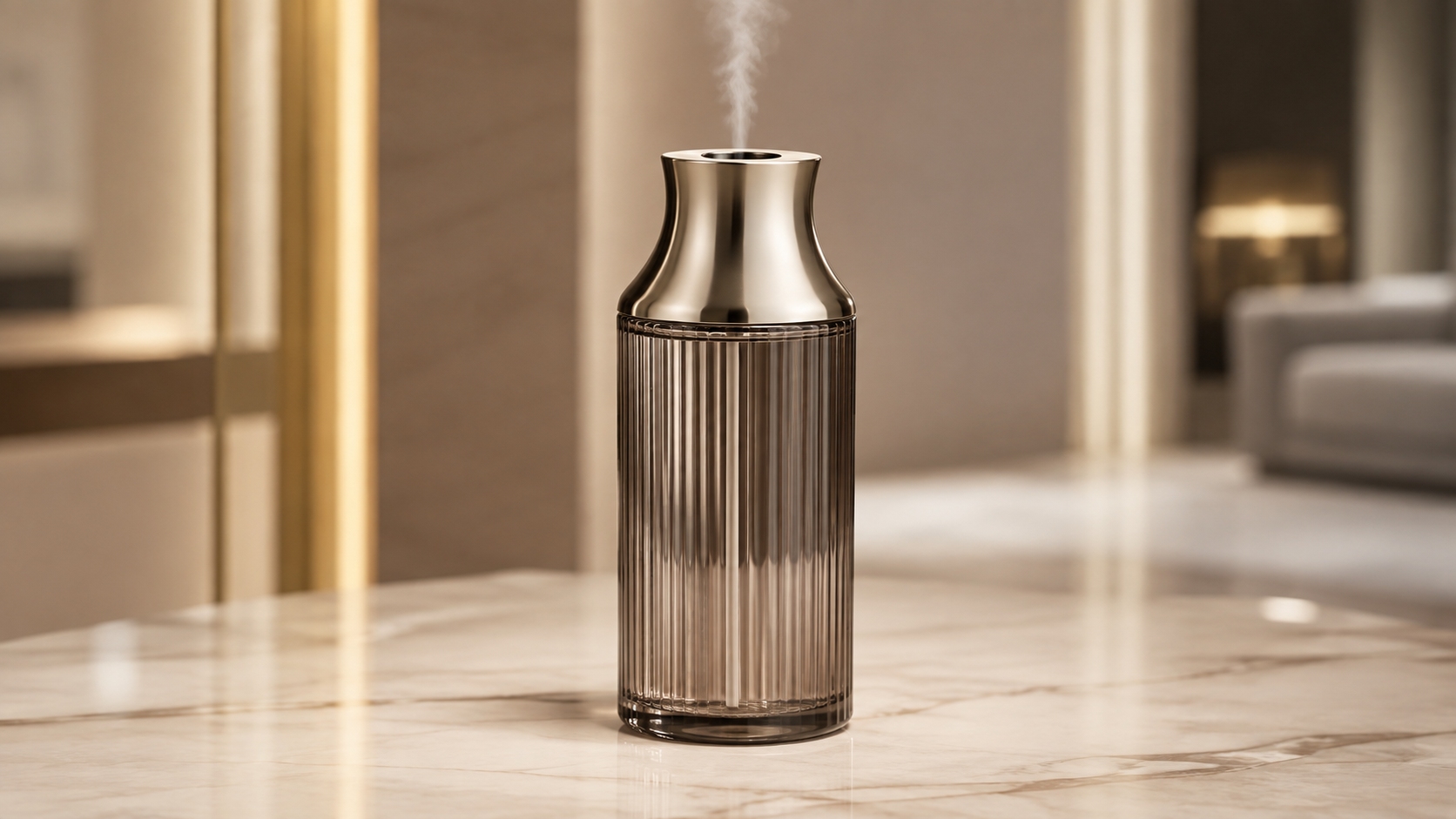
Hotel Scent Direction
The type of hotel gives the fragrance team a starting point, but it should never become a fixed recipe. Interiors, location, guest profile, food service, and the overall brand still need to be considered.
| Hotel Type | Useful Direction | Watch For |
|---|---|---|
| Modern city hotel | Tea, soft citrus, clean woods, light musk | Sharp cleaner-like citrus |
| Beach resort | Green notes, citrus, airy floral, light woods | Heavy coconut or sweet tropical effects |
| Heritage hotel | Woods, dry spice, restrained amber | Dense smoky or overly sweet bases |
| Wellness hotel | Tea, herbs, soft woods, restrained floral | Strong medicinal herbal notes |
| Boutique hotel | Botanical, mineral, woody, spicy | Too many unusual notes competing together |
| Mountain resort | Cedar, green notes, vetiver, dry amber | Heavy pine-cleaner character |
Take a quiet coastal hotel with pale stone, oak, linen, and large windows. Bergamot, tea, mineral-style notes, and dry cedar would make sense as an early direction. Heavy coconut or very sweet tropical notes might push the scent toward a beach-product smell that does not fit the interior.
Existing Odor Audit
Walk through the hotel before any fragrance is added. Do it more than once. Breakfast, housekeeping, afternoon arrivals, and evening food service can make the same lobby smell completely different.
| Time / Area | What to Record | What to Check |
|---|---|---|
| Breakfast | Coffee, bread, hot food, fruit | How far lobby scent reaches into dining areas |
| Housekeeping period | Floor cleaner, laundry, surface products | Whether cleaning products compete with the hotel scent |
| Afternoon check-in | Open doors, outdoor air, heavy guest traffic | Whether the entrance loses scent |
| Evening | Bar, restaurant, alcohol, kitchen aromas | Whether food and fragrance overlap |
| Any time | Drain, smoke, damp, waste, HVAC odors | Whether the odor source needs to be fixed first |
Drainage, moisture, smoke, waste, or ventilation problems should not be covered with more fragrance. They need to be dealt with at the source. EPA guidance treats source control and ventilation as separate parts of indoor-air management.[1]
Scent Zone Plan
A guest who walks through an entrance experiences scent very differently from someone sitting in a lounge for an hour. The same setting should not be copied across the whole property.
| Zone | Typical Stay | Scent Target |
|---|---|---|
| Main entrance | Seconds | Light but easy to notice |
| Reception | Several minutes | Clear, controlled |
| Main lobby | Several minutes to longer stays | Light background scent |
| Lounge | 30-60+ minutes | Lower than reception |
| Lift lobby | Short stay | Very light |
| Guest corridor | Passing | Very light |
| Restaurant entrance | Passing | Very light or none |
| Restaurant interior | Long stay | Usually none |
| Guest room | 8+ hours possible | Optional or reduced scent |
These levels are starting points for planning. They are not exposure limits or fixed hotel-industry standards.
Fragrance Formula Rules
A hotel fragrance still has an opening, a main body, and a base, but each part needs to work after the fragrance is spread through a large room. A note that smells balanced on a paper strip can behave very differently after diffusion.
| Part | Common Notes | Role in the Hotel | Common Problem |
|---|---|---|---|
| Opening | Bergamot, lemon, mandarin, green leaves | Shapes the arrival impression | Can become sharp or cleaner-like |
| Main character | Tea, fig, neroli, jasmine, magnolia, light spice | Carries the recognizable scent | Can become too floral or too busy |
| Base | Cedar, vetiver, soft woods, musk, amber | Adds depth and staying power | Can feel heavy during long exposure |
The formula should still have a clear identity when it sits quietly in the background. If the scent only works when the diffuser is running at a high level, it is not a good fit for continuous hotel use.
Simple combinations are often enough:
- citrus + tea + cedar;
- fig leaf + mineral notes + musk;
- neroli + dry woods + soft spice;
- bergamot + green leaves + vetiver.
XUELEI's guide to fragrance formulation, safety testing, and production covers the relationship between raw materials, formulation, testing, and the final application.
Scent Sample Approval
Final approval should happen with the scent running through the diffuser that will actually be used. A paper blotter is useful for early screening, but it does not show how the fragrance will behave in a lobby.
For the first comparison, label the fragrances Sample A, B, and C. Neutral names make it less likely that a name such as “Luxury Woods” will influence the result.
| Test Item | Question |
|---|---|
| Brand fit | Does this smell right for the hotel? |
| Recognition | Can testers tell it apart from the other samples? |
| Comfort | Does it remain comfortable after a longer stay? |
| Balance | Does one note become too strong after diffusion? |
| Coverage | Are there obvious strong or weak areas? |
| Food interference | Does the fragrance reach nearby dining areas? |
A simple 1-5 internal score makes it easier to compare what testers are actually noticing.
| Sample | Brand Fit | Comfort | Recognition | Coverage | Total |
|---|---|---|---|---|---|
| A | 5/5 | 3/5 | 5/5 | 4/5 | 17/20 |
| B | 4/5 | 5/5 | 4/5 | 5/5 | 18/20 |
| C | 3/5 | 4/5 | 3/5 | 4/5 | 14/20 |
Internal example: Sample A gives the strongest brand impression, but B may work better in daily hotel use because testers find it more comfortable and the coverage is more even.
Checking the room again after 20-30 minutes is a useful way to compare long-stay comfort. That timing is an internal test method, not a safety limit.
Space Calculation
Approximate room volume = floor area × average ceiling height
| Floor Area | Ceiling Height | Approx. Volume |
|---|---|---|
| 80 m² | 3 m | 240 m³ |
| 150 m² | 3 m | 450 m³ |
| 150 m² | 8 m | 1,200 m³ |
| 200 m² | 5 m | 1,000 m³ |
| 300 m² | 6 m | 1,800 m³ |
The two 150 m² examples are a good reminder not to buy a diffuser by square meters alone. Raising the ceiling from 3 m to 8 m changes the calculated room volume from 450 m³ to 1,200 m³.
Irregular spaces are easier to work with when they are split into smaller zones.
| Zone | Area | Ceiling | Approx. Volume |
|---|---|---|---|
| Entrance | 60 m² | 4 m | 240 m³ |
| Reception | 120 m² | 4 m | 480 m³ |
| Lounge | 180 m² | 3.5 m | 630 m³ |
| Total | 360 m² | — | 1,350 m³ |
Those three areas add up to 1,350 m³, but treating them as one scent zone would ignore how the hotel is actually used. The entrance loses air through opening doors, reception has short guest stays, and the lounge has people sitting for much longer.
Ventilation matters as well. ASHRAE Standard 62.1 covers ventilation rates and other requirements for acceptable indoor air quality in commercial buildings.[2]
Diffuser Layout
Before fixing the diffuser location, mark the main air paths and guest areas on the floor plan:
- air supply vents;
- return vents;
- exhaust vents;
- air curtains;
- ceiling fans;
- automatic and revolving doors;
- stairs and escalators;
- open atriums;
- restaurants and cafés;
- long-stay seating areas.
| What You Notice | Possible Reason | What to Try First |
|---|---|---|
| Strong beside the machine, weak farther away | Poor distribution | Move the outlet or split the space into another zone |
| Weak mainly at the entrance | Air loss through doors | Review the diffuser position before increasing all output |
| Restaurant smells perfumed | Zone overlap or HVAC crossover | Reduce or separate the nearby zone |
| High atrium feels uneven | Large air volume and vertical airflow | Check distribution where guests actually stand |
| One seat always smells much stronger | Direct scent path or overlapping zones | Change outlet direction or location |
Standalone or HVAC
| Method | Where It Usually Works Well | What to Check |
|---|---|---|
| Standalone cold-air unit | Reception, lounge, smaller lobby, spa, individual zone | Large or irregular spaces may need more than one unit |
| HVAC-connected diffusion | Large open area with a suitable air-handling zone | The HVAC system may also serve areas that should remain unscented |
| Multiple controlled zones | Large lobby with entrance, reception, lounge, and corridors | Each zone needs its own setting and record |
If the same HVAC system serves the lobby, restaurant, office, and meeting rooms, check where the air goes before connecting fragrance equipment. Any connection should follow the equipment manufacturer's requirements and be coordinated with the hotel's facilities or HVAC team.
Output Test
Keep everything else the same while testing output. If the fragrance, diffuser position, operating time, and setting all change at once, the result tells very little.
| Trial | Example Setting | Entrance | Reception | Lounge | Result |
|---|---|---|---|---|---|
| A | 20% | 2/5 | 2/5 | 1/5 | Too weak |
| B | 35% | 3/5 | 3/5 | 3/5 | Balanced |
| C | 50% | 4/5 | 5/5 | 4/5 | Reception too strong |
Hypothetical example: These percentages only show how test results can be recorded. A 35% setting on one diffuser cannot be compared directly with 35% on another model.
If reception is already at 3/5 but the entrance is only 1/5, simply raising the whole system may push reception to 5/5 while the entrance is still weak. That points to a placement or airflow problem rather than a lack of machine power.
Pilot Test
Staff who work around the fragrance every day will gradually notice it less. Their feedback is still useful, but it should be combined with people entering the area fresh.
| Tester / Condition | What It Helps Check |
|---|---|
| Fresh entrant | Arrival strength and first impression |
| Regular staff | Comfort over a longer period |
| Quiet period | Basic distribution |
| Normal traffic | Typical daily performance |
| Peak check-in | Open doors and higher occupancy |
| Different HVAC condition | Heating, cooling, or seasonal changes |
One possible internal pilot is 2 quiet checks, 2 normal-traffic checks, 2 peak-arrival checks, and 2 checks under a different HVAC or seasonal condition. Eight checks are simply a workable example, not an industry requirement.
Restaurants and Guest Rooms
| Area | Suggested Approach |
|---|---|
| Restaurant interior | Usually keep lobby scent out |
| Breakfast room | Check crossover while food is being served |
| Café | Let coffee and food aromas remain dominant |
| Guest corridor | Keep fragrance very light |
| Guest room | Use optional or reduced fragrance |
| Scent-sensitive request | Remove optional scented products where practical |
Guest rooms already contain several smells from laundry detergent, surface cleaner, shampoo, soap, and other amenities. Those products do not have to smell identical, but they should not fight with each other.
Lit candles should not be treated as a normal guest-room scenting method. The U.S. Fire Administration advises against using lit candles in bedrooms and sleeping areas.[3]
Safety Documents
| Document | What It Is Used For |
|---|---|
| Safety Data Sheet | Hazards, handling, storage, protective measures, emergency information |
| IFRA conformity information | Shows compliance with applicable IFRA Standards for the stated use |
| Ingredient / allergen information | Provides information required for the relevant market or application |
| Storage instructions | Covers container, temperature, shelf life, and handling requirements |
IFRA Standards can prohibit, restrict, or set specifications for fragrance ingredients depending on the intended use.[4]
An IFRA Certificate of Conformity is prepared for a fragrance mixture and a stated use. IFRA itself does not issue the certificate, and the certificate is not a replacement for a complete safety assessment or local legal requirements.[5]
OSHA's Hazard Communication Standard covers labels, Safety Data Sheets, and worker information and training where the standard applies.[6]
A fragrance prepared for ambient diffusion should not automatically be used in candles, sprays, soap, or body lotion. Each finished product has its own requirements.
Guest Complaints
If a guest reports discomfort, keep the response simple and traceable:
- find the scent zone involved;
- record the current diffuser setting;
- check whether that part of the room smells stronger than the rest;
- reduce or stop the zone if needed;
- offer another room or route where practical;
- record whether similar complaints appear again.
ATSDR notes that responses to odors can vary with the substance, amount, exposure frequency, duration, and individual sensitivity.[7]
Raw complaint totals can be misleading when hotel occupancy changes. Compare complaints with guest volume instead.
| Example Period | Complaints | Occupied Room Nights | Complaints per 1,000 |
|---|---|---|---|
| A | 5 | 5,000 | 1.00 |
| B | 8 | 12,000 | 0.67 |
Hypothetical example: Period B has three more complaints, but it also has much higher occupancy. Once the figures are compared per 1,000 occupied room nights, its complaint rate is lower.
Fragrance Use
Average fragrance use = fragrance used ÷ operating hours
| Zone | Bottle | Days | Hours / Day | Total Hours | Average Use |
|---|---|---|---|---|---|
| Lobby A | 500 mL | 40 | 12 | 480 h | 1.04 mL/h |
| Lobby B | 500 mL | 40 | 6 | 240 h | 2.08 mL/h |
Both bottles lasted 40 days. Look only at the calendar and they appear identical. Once operating hours are included, Lobby B is using fragrance at about twice the hourly rate.
Monthly use can be estimated in the same way:
0.8 mL/h × 10 h/day × 30 days = 240 mL/month
1.2 mL/h × 12 h/day × 30 days = 432 mL/month
These numbers are calculation examples, not recommended consumption rates.
Maintenance Records
Routine diffuser checks should cover:
- atomizing components;
- tubing;
- seals;
- nozzles;
- connectors;
- fragrance bottle;
- residue around the outlet;
- current machine setting.
If output suddenly seems weaker, check the machine before increasing the setting. A dirty or partly blocked system can create exactly the same symptom.
Fragrance outlets should not be aimed directly at painted surfaces, acrylic, electronics, fabrics, wood finishes, or other materials unless compatibility is known.
Formula and Batch Control
| Record | Example |
|---|---|
| Formula code | HS-01 |
| Approval date | May 2026 |
| Reference batch | B2605 |
| Target area | Main lobby |
| Tested machine setting | 35% on the approved unit |
| Reception score | 3/5 |
| Lounge score | 2-3/5 |
Hypothetical record: The important part is not the 35% number. The value comes from being able to repeat the same conditions when a new batch arrives.
If a raw material changes because of sourcing, availability, regulation, or reformulation, compare the revised fragrance with the approved reference before accepting it as the same scent.
XUELEI's guide to factory selection and production consistency covers formula records, reference samples, testing, and repeat-production controls that are also useful for a long-term hotel scent program.
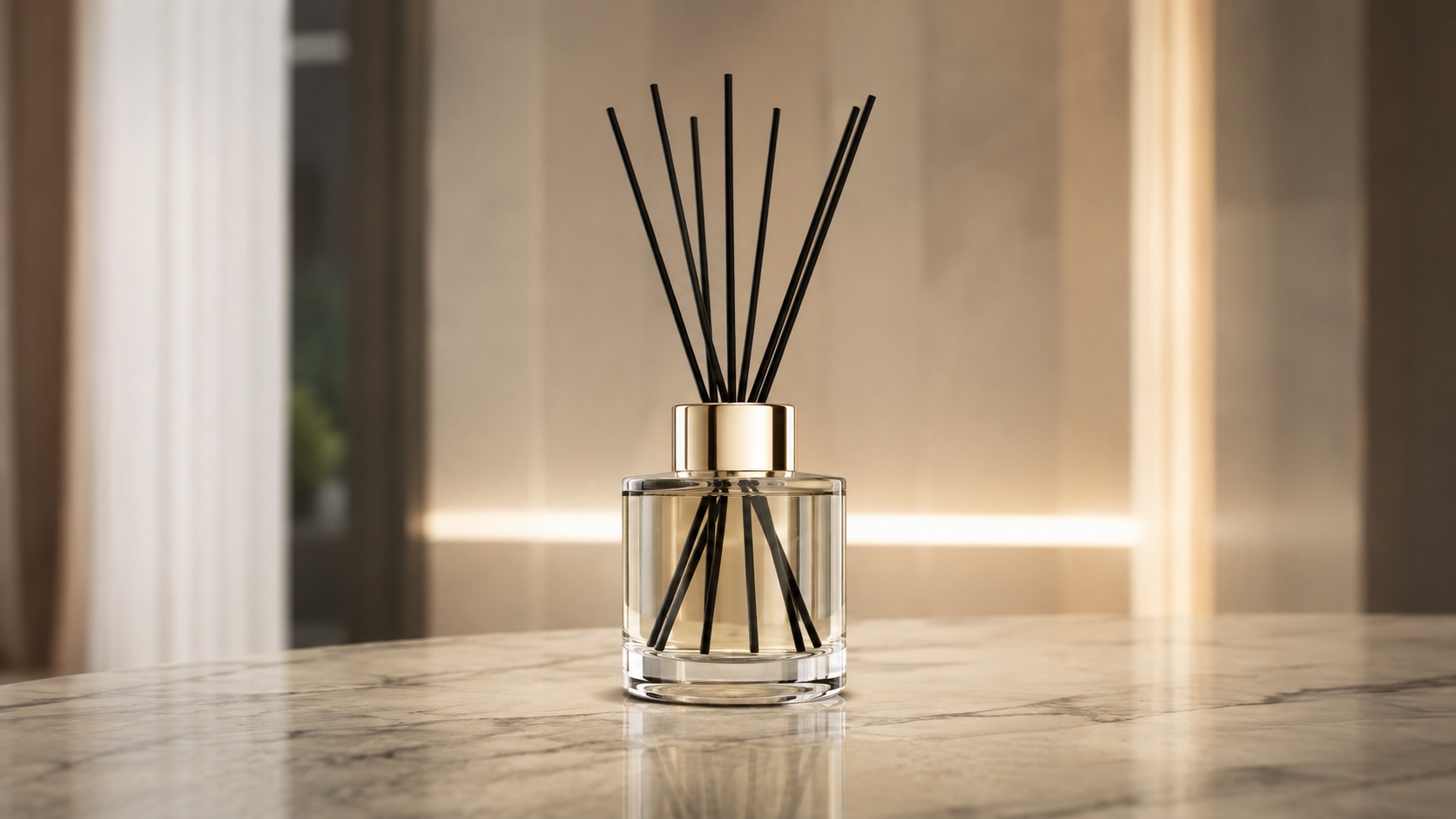
Performance Metrics
| Metric | What to Record |
|---|---|
| Guest comments | Repeated positive and negative comments |
| Recognition | Questions such as “What scent is this?” |
| Complaint rate | Complaints compared with guest volume |
| Consumption | mL per operating hour |
| Coverage | Strong and weak areas along the same walking route |
| Adjustments | How often staff have to change the setting |
| Batch consistency | Whether new deliveries still match the approved sample |
These records show whether the scent program is stable. They do not prove that fragrance caused higher revenue, loyalty, or guest satisfaction unless the hotel has data designed to measure those outcomes.
Other Fragrance Products
| Product | What Needs to Be Rechecked |
|---|---|
| Scented candle | Wax compatibility, burn performance, intended-use requirements |
| Room spray | Solvent, packaging, spray performance |
| Reed diffuser | Base, reed performance, evaporation |
| Linen product | Base compatibility and intended textile use |
| Body care | Skin-contact formula and applicable safety requirements |
XUELEI's fragrance OEM/ODM services cover several fragrance-product formats.
A “natural” ingredient is not automatically safer because of where it comes from. FDA advises consumers not to assume a cosmetic ingredient is safer simply because it is natural.[8]
XUELEI's guide to natural and synthetic fragrances compares factors such as consistency, stability, supply, cost, and performance in finished products.