
Wood Perfume for Men | Scent Profiles, Seasonal Use
For spring and summer, try cedarwood with citrus or fresh vetiver. In autumn, sandalwood with cardamom adds warmth. For winter, go for oud with amber or cedarwood with incense. Want one woody perfume for the whole year? A dry cedar-vetiver blend is a good place to start. Test it on skin before buying a full bottle.
What Do Different Woody Notes Smell Like?
| Note or accord | What it smells like | Best for |
|---|---|---|
| Cedarwood | Dry wood, pencil shavings | People who like crisp scents without much sweetness |
| Sandalwood | Soft, creamy, gently warm | People who prefer smooth woods over sharp ones |
| Vetiver | Dry earth, grass roots, sometimes smoke | Fresh, green, or earthy fragrances |
| Patchouli | Damp earth, leaves, sometimes a little sweetness | Deeper, earthier woody blends |
| Oud accord | Dark wood, resin, leather, sometimes medicinal | Rich, complex woody fragrances |
| Smoky wood accord | Incense, burnt wood | Fragrances with a noticeable smoky edge |
Vetiver actually comes from grass roots, while patchouli comes from leaves. Neither is wood, even though both are common in woody perfumes. If cedarwood smells too sharp, try sandalwood's softer scent. And don't expect every oud perfume to smell burnt. Smoky wood accords have a more obvious charred-wood smell.
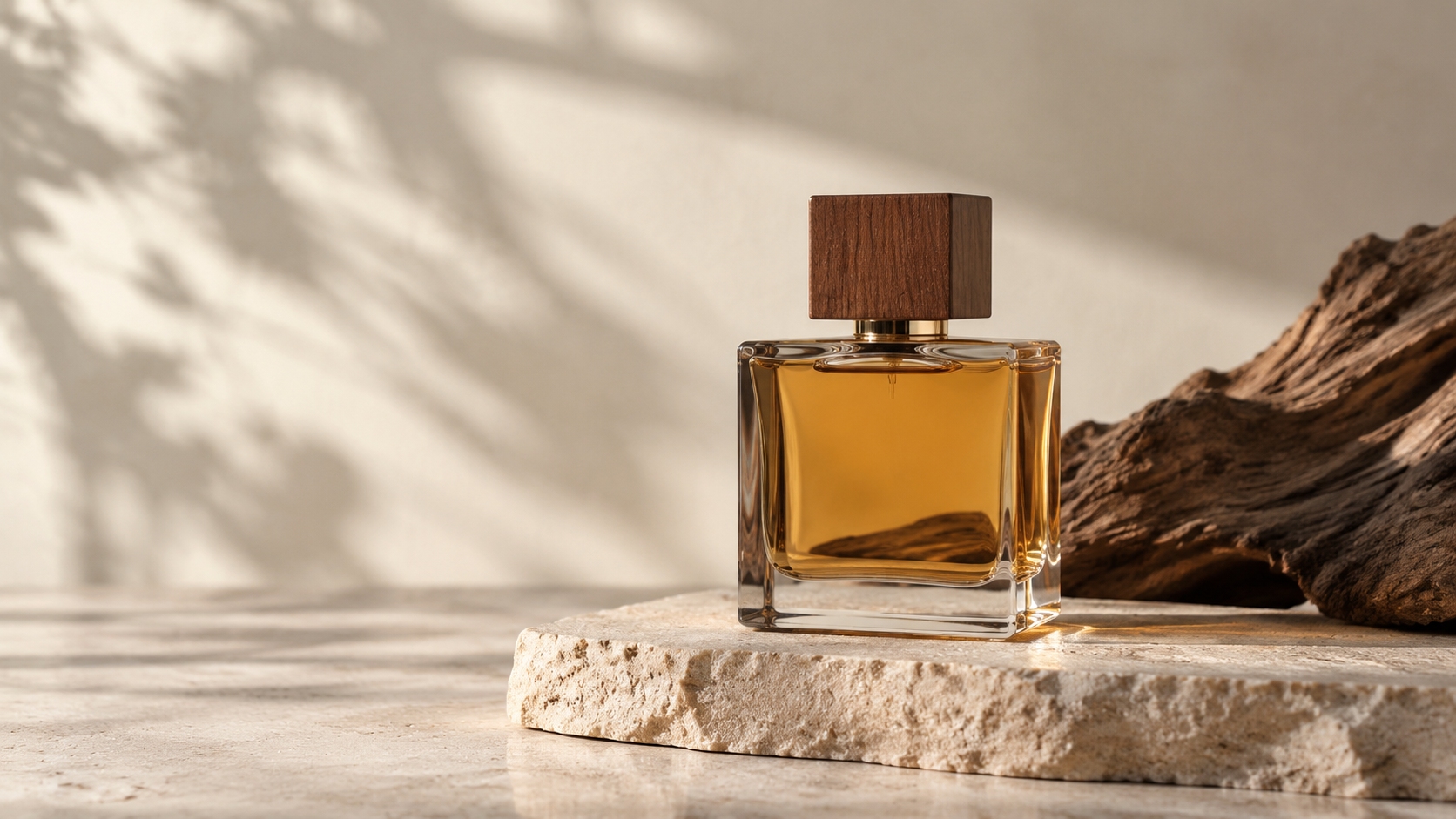
Which Wood Perfume Works Best for Each Season?
| Season | Combinations to try | What to check |
|---|---|---|
| Spring | Cedarwood + bergamot; vetiver + grapefruit | Does the woody scent still smell good after the citrus fades? |
| Summer | Cedarwood + juniper; vetiver + light musk | Does it become too sweet or smoky in a warm room? |
| Autumn | Sandalwood + cardamom; cedarwood + patchouli | Does the spice take over as the fragrance settles? |
| Winter | Oud + amber; cedarwood + incense | Does it smell too strong in a heated room? |
These are starting points, not strict rules. Cedarwood mixed with vanilla may smell warmer and richer than sandalwood mixed with citrus. Heat, airflow, and how much perfume is applied can also change how strongly a fragrance smells.[1]
Can You Wear the Same Woody Perfume All Year?
Yes. Try a dry cedar-vetiver scent or a softer sandalwood-musk blend. Test it indoors on a warm day, then again in cooler weather. If the woody base smells comfortable in both, there's little reason to change perfumes every season. Fragrance-free workplace rules still apply.
Does Eau de Parfum Last Longer Than Eau de Toilette?
Not always. IFRA lists typical fragrance concentrations of 5-15% for eau de toilette (EDT) and 10-20% for eau de parfum (EDP). The ranges overlap, and they aren't fixed international standards.[2]
A higher concentration doesn't guarantee longer wear. Even an EDT and EDP with the same name can have different formulas. The better test is to compare perfume concentrations on skin rather than judging by the label alone.
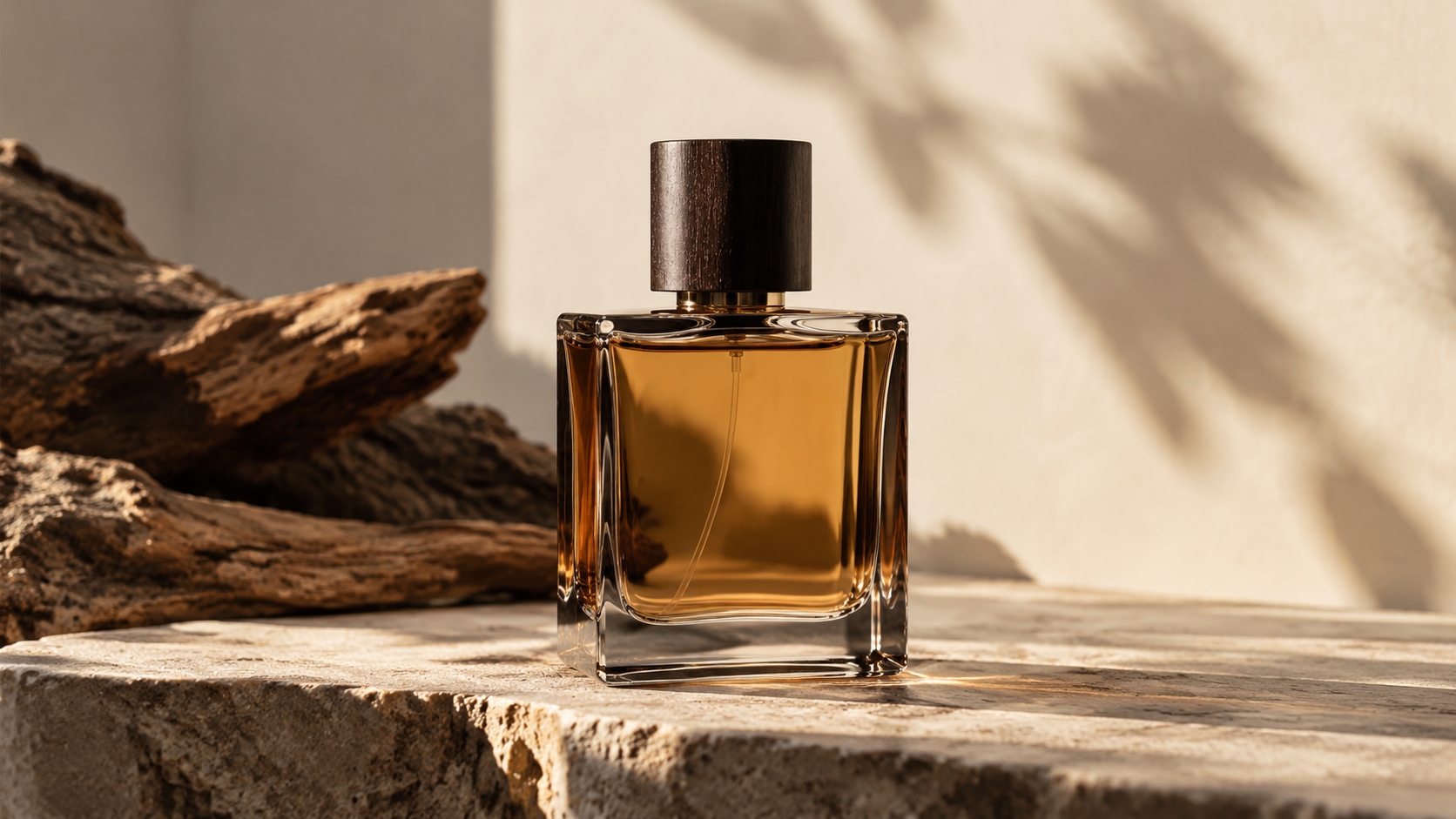
How to Test a Woody Perfume Before Buying
Start by testing perfume samples on separate paper strips. Pick the scents you like, then try each one on skin on a different day. Use roughly the same amount and application area for a fair comparison.
| When to check | What to notice |
|---|---|
| After 2 minutes | Is the opening mostly citrus, spice, or alcohol? |
| After 30 minutes | Can you smell the woody note you wanted? |
| After 2 hours | Has it become too sweet, smoky, sharp, or strong? |
| After 6 hours | Can you still smell it? Is the scent now close to the skin? |
These times are just useful checkpoints. They don't mean every perfume develops or lasts the same way. Paper strips also won't tell you exactly how a fragrance behaves on skin. A 2025 study tested a mixture of eight fragrance molecules on 10 volunteers, but it didn't measure how long finished woody perfumes last.[3]
Do Woody Perfumes Always Contain Real Wood Oils?
No. A fragrance note tells you what a perfume is meant to smell like, not exactly what's in the bottle. An oud accord may contain no natural agarwood oil. Sandalwood scents can also be made with synthetic aroma materials.[4]
In the US, a cosmetic label may list a mixture of scent ingredients simply as "Fragrance," without naming every component.[5]
What If a Woody Perfume Irritates Your Skin?
Both natural and synthetic fragrance ingredients can cause skin reactions. If a perfume causes itching, redness, or burning, stop using it. Seek medical advice if symptoms are severe or don't go away. Trying a perfume on skin can show how it smells, but it can't diagnose an allergy.[6]
Which Wood Perfume Should You Buy?
Pick the one that still smells good to you after two hours, not just the one with the best opening. If two perfumes are equally appealing, check how strong they smell to someone standing nearby. A softer scent is usually easier to wear in offices, restaurants, and other shared indoor spaces.