
Which Fragrance Products Can One Manufacturer Supply
A fragrance manufacturer can supply much more than perfume. XUELEI's published OEM/ODM range covers seven product categories: perfume, reed diffusers, stone diffusers, scented body care, car diffusers, scented candles and solid perfume. Brands can use one scent concept across several of these products, but the formulas, packaging and testing will differ.
Which fragrance products can one manufacturer supply?
Here are the main product types and some common specifications buyers can use when preparing an order.
| Product category | Common formats | Example specification |
|---|---|---|
| Perfume | EDP, EDT, cologne, perfume oil, roll-on, travel spray | 50 mL spray; 10 mL travel spray |
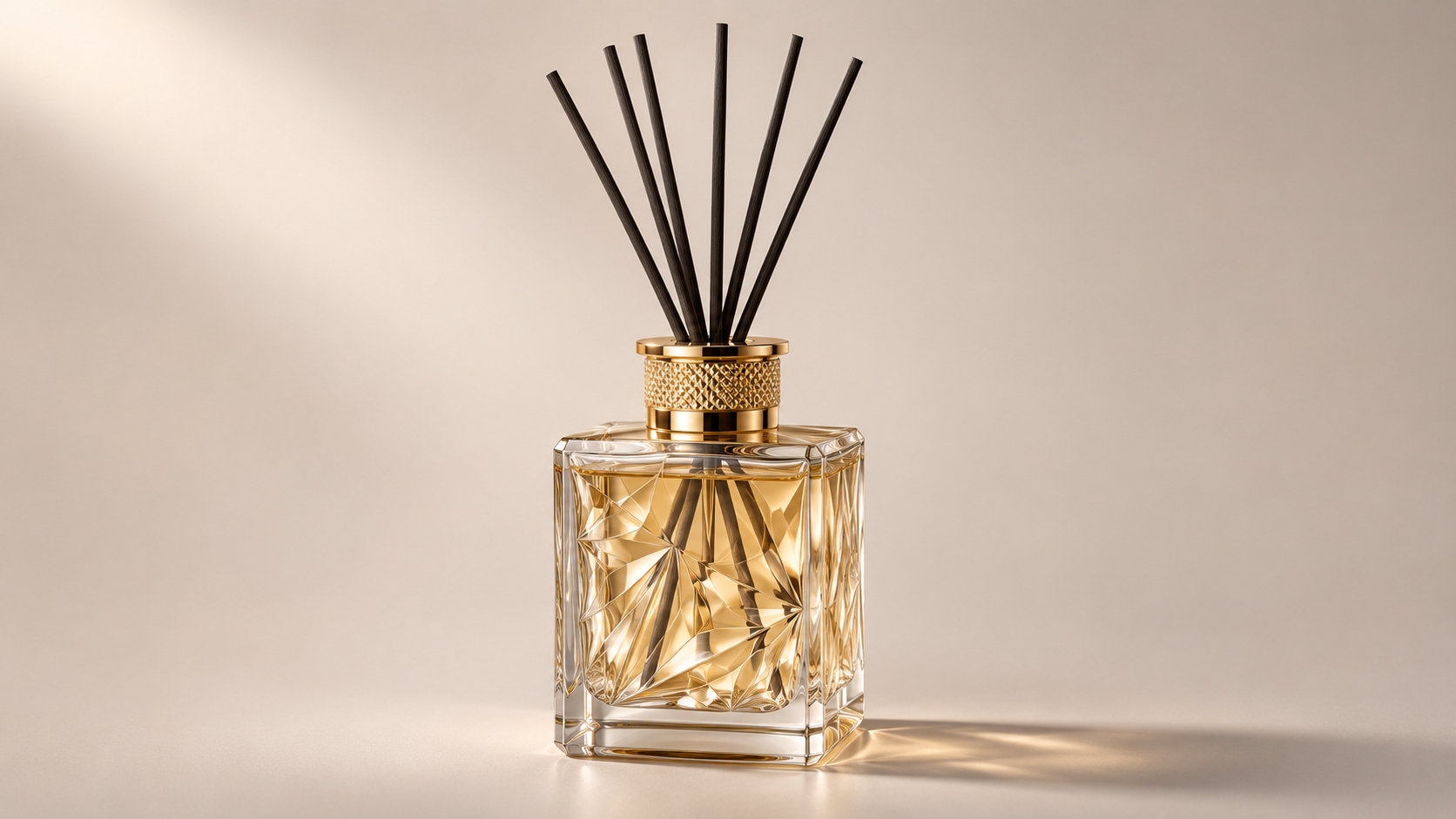
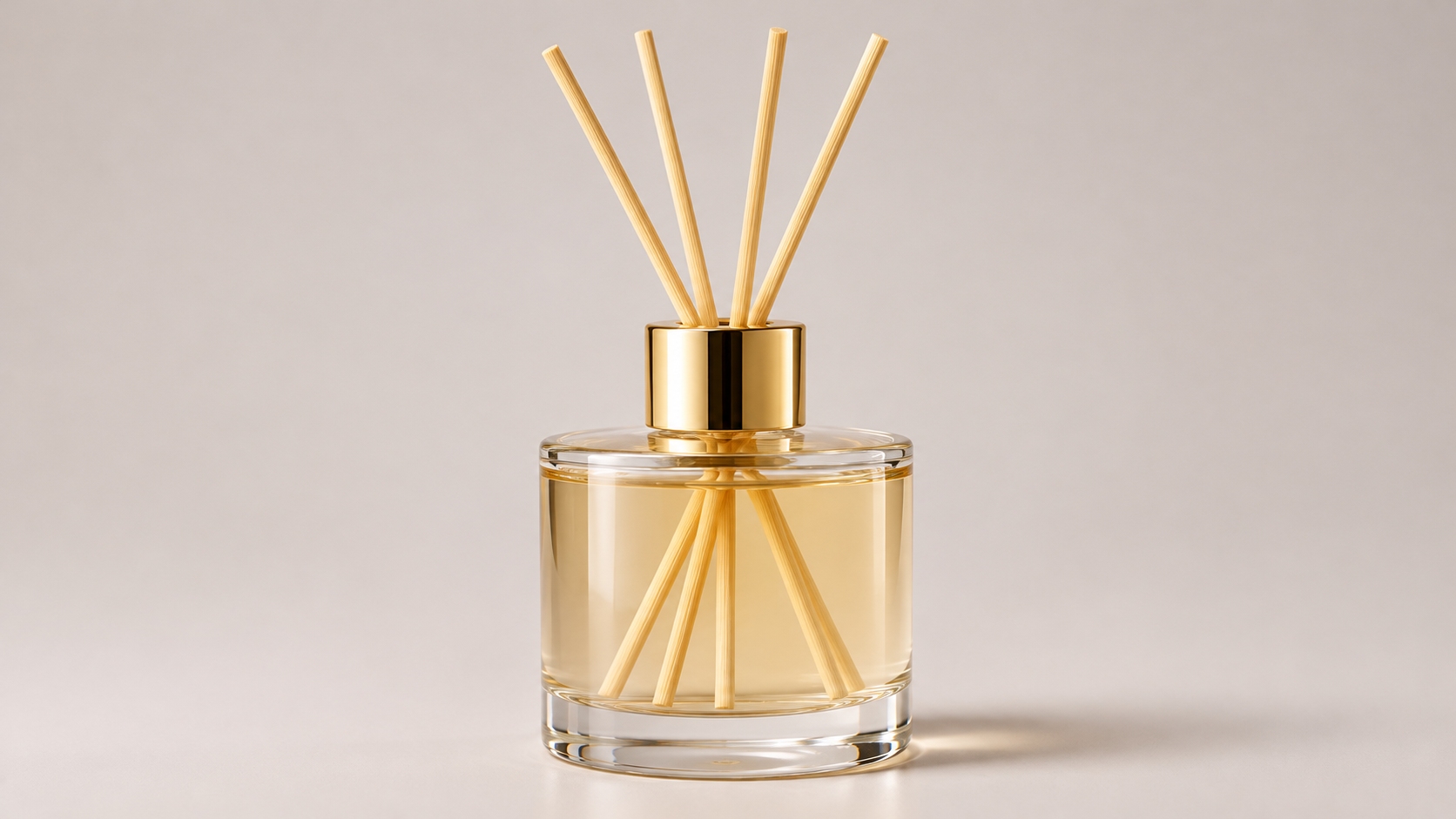
| Reed diffuser | Glass-bottle diffuser, refill | 150 mL bottle with selected reeds |
| Stone diffuser | Porous-stone kit, scent refill | Stone and fragrance liquid packed together |
| Scented body care | Body mist, scented lotion, body oil | 200 mL lotion |
| Car diffuser | Hanging diffuser, vent-mounted format | Filled or replaceable unit |
| Scented candle | Jar candle, gift candle | 180 g wax fill in a specified vessel |
| Solid perfume | Wax- or balm-based fragrance | 15 g tin or compact |
Perfume oils and travel sprays are perfume formats. Samples are trial sizes, while gift sets combine several products. XUELEI also provides scent marketing for commercial spaces. Room sprays, plug-in refills and scented cleaners are not included in its published product range, so buyers should confirm these separately.
What changes when manufacturing different fragrance products?
Perfume sprays and perfume oils
EDP and EDT describe fragrance concentration. They don't guarantee how long a perfume will last. XUELEI's perfume concentration guide gives common ranges of 10–20% for EDP and 5–15% for EDT. For example, a 1 kg formula at 15% by weight contains 150 g of fragrance concentrate.
A 50 mL perfume and a 10 mL travel spray may use the same formula. However, each bottle needs to be checked for pump, gasket, closure and leakage problems. Perfume oil is different. It needs a suitable carrier and an applicator that works with its thickness. XUELEI's perfume manufacturing process covers formula approval, stability checks, filling and finished-batch inspection.
Body mists, lotions and oils
Adding fragrance to a lotion can affect its texture and stability. A body mist also needs a formula that works with its spray system. Water-based products may need preservatives and microbiological testing to prevent contamination.
A supplier of fragrance concentrate may not manufacture the finished body care product. Buyers should check whether the factory handles the complete cosmetic formula or only supplies the fragrance ingredient.
Reed, stone and car diffusers
A reed diffuser's performance depends on its liquid base, reed material, number of reeds, bottle-neck design and room conditions. Stone diffusers work differently. Their performance depends on how well the stone absorbs and releases the fragrance liquid.
Both formats need testing with the actual product. Check scent release, evaporation, staining and leakage. Smelling the fragrance on a test strip won't tell buyers how well it will work in a finished diffuser.
Car diffusers have another set of problems. They may sit in direct sunlight, face high cabin temperatures and move around while the vehicle is running. The mounting method also matters. Test the actual unit and the materials that could come into contact with leaked liquid.
Candles and solid perfume
A scented candle needs the right combination of wax, fragrance, wick and vessel. Changing the wick or vessel diameter can affect the flame and the temperature of the container. ASTM F2417-26 sets minimum fire-safety requirements for candles under normal use. Testing should cover the finished candle, not just its fragrance or wax.[1]
Solid perfume uses a wax or balm base instead of a spray liquid. The formula should keep a suitable texture during storage. Oil separation, packaging compatibility and skin-use safety also need to be checked.
Can one scent be used across several fragrance products?
Yes. A brand can use the same scent direction for perfume, lotion, reed diffusers and candles. The finished formulas still need to suit each product. XUELEI's cross-category fragrance sourcing process covers testing the fragrance in its intended application.
An IFRA Certificate of Conformity applies to a specific fragrance mixture and its intended use. The fragrance mixture manufacturer prepares the certificate; IFRA does not issue it. The certificate also does not replace a finished-product safety assessment or local legal requirements.[2]
Approval records should identify the fragrance code, product type, use level and destination market. A certificate for one application should not be treated as approval for every product carrying the same scent name.
Does one manufacturer make every product in one factory?
Not always. Some suppliers blend fragrance concentrates, while others manufacture finished products. A multi-category supplier may also manage production across several factories.
There are three common business models:
- Fragrance compound supplier: Supplies fragrance mixtures for another company to use in its finished products.
- Finished-product manufacturer: Develops, fills and packs specified fragrance products.
- Multi-category partner: Handles several product types and uses specialist facilities when a product needs equipment outside its own production lines.
For every product, buyers should know who owns the formula, where it is made, who handles testing and who releases the finished batch. The OEM and ODM agreement should also state who develops the formula and who can approve changes.
How do product sizes and scent variants affect SKU count and MOQ?
SKU numbers can grow quickly when a brand adds more scents, formats and sizes. For example, two scents × three product types × two sizes = 12 retail SKUs, assuming every combination is offered.
Each SKU needs its own packaging details and artwork. Two perfume spray sizes may share one formula if both dispensing systems pass compatibility checks. A new product category usually needs a separate application formula and testing.
For custom perfume projects, XUELEI publishes a typical MOQ of 5,000–10,000 bottles per fragrance. This figure applies to its stated custom perfume offering, not every fragrance category or the entire industry. XUELEI's bulk perfume supplier guidance also explains how packaging components can affect order quantities.
Before confirming an order, check the MOQ for each format, size, scent and packaging component. A perfume bottle, candle vessel and diffuser container may all have different minimum order requirements.
What should a multi-category fragrance quotation include?
A quotation should cover the actual products being developed, not just the fragrance name and estimated order quantity. Buyers should confirm these six areas:
- Product brief: Product format, intended use, formula base, net content or wax weight, target market and scent direction.
- Formula: Fragrance code, target use level, applicable restrictions, approved sample and formula revision.
- Packaging: Bottle, pump, gasket, reed, wick, vessel, decoration, label and shipping carton.
- Testing: Test plan, acceptance criteria, packaging compatibility and required safety or regulatory checks.
- Production: Manufacturing site, outsourced processes, MOQ by SKU and component, batch coding and inspection responsibility.
- Commercial terms: Development and sample fees, tooling, unit price, payment terms, lead time, delivery terms and freight.
Ask for separate costs for development, sampling, tooling, decoration, testing, filling, gift-set assembly and freight. The formula and final packaging samples should be approved before bulk production begins. XUELEI's scent development workflow covers product development and sample approval. Its factory capability assessment covers equipment, test records and available production capacity.
Which market rules apply to fragrance products?
EU cosmetics: perfume and body care
EU cosmetics rules require certain listed fragrance allergens to appear on the ingredient list when their concentration exceeds 0.001% (10 ppm) in leave-on products or 0.01% (100 ppm) in rinse-off products. These figures are allergen-labeling thresholds, not limits on total fragrance concentration. Regulation (EU) 2023/1545 added 56 allergens to the individual labeling requirements.[3]
Since 31 July 2026, new cosmetic products placed on the EU market must follow the updated allergen-labeling rules. Products placed on the market before that date may continue to be made available until 31 July 2028, subject to the transition conditions.[4]
EU cosmetics also need a responsible person, a safety assessment, a Product Information File (PIF) and notification through the Cosmetic Products Notification Portal (CPNP) before market placement.[5]
U.S. cosmetics: FDA registration and listing
Under the U.S. Modernization of Cosmetics Regulation Act of 2022 (MoCRA), covered cosmetic facilities must renew FDA registration every two years. The responsible person must list each marketed cosmetic product and update the listing annually. Some statutory exemptions apply.
FDA registration or product listing does not mean the FDA has approved the product.[6]
EU home fragrance: CLP, PCN and UFI
Reed diffuser liquids and scented candles are not automatically cosmetics. Their CLP classification depends on the finished mixture. Under EU rules, mixtures classified for human-health or physical hazards generally require a Poison Centre Notification (PCN), subject to applicable exemptions. Environmental-only classifications do not trigger PCN under Article 45. Candles also need assessment and may require notification if they meet the relevant hazard criteria.[7]
A required Unique Formula Identifier (UFI) must match the notified mixture. Products with the same composition may share a UFI, while a different composition needs a different identifier.[8]
Shipping rules are a separate matter. Alcohol-based perfumes and some diffuser liquids may fall under dangerous-goods regulations, depending on their composition, flash point and shipping route.
What manufacturing resources does XUELEI publish?
XUELEI reports a fragrance library of 50,000+ scent references, a catalog of 23,000+ bottle designs and 17 automated production lines. These are company-reported figures. The actual production site, equipment and schedule should still be confirmed for each order. Further details are available in XUELEI's manufacturing information.
Frequently asked questions
Can the same formula fill both a 50 mL and a 10 mL perfume spray?
Yes, if the liquid formula stays the same and both bottle-and-pump systems pass compatibility, dispensing and leakage checks.
Does XUELEI's 5,000–10,000-unit MOQ apply to candles and diffusers?
No. The published range refers to custom perfume projects. Candles, diffusers, body care and their packaging components need separate MOQ confirmation.
Can a perfume and diffuser be sold as one gift set?
Yes. They can share one retail SKU, but each product still needs its own formula, batch record, label and approval.